
Last Updated on September 10, 2026
Reviewed by Sanford M, Relationship and Sex Health Counsellor
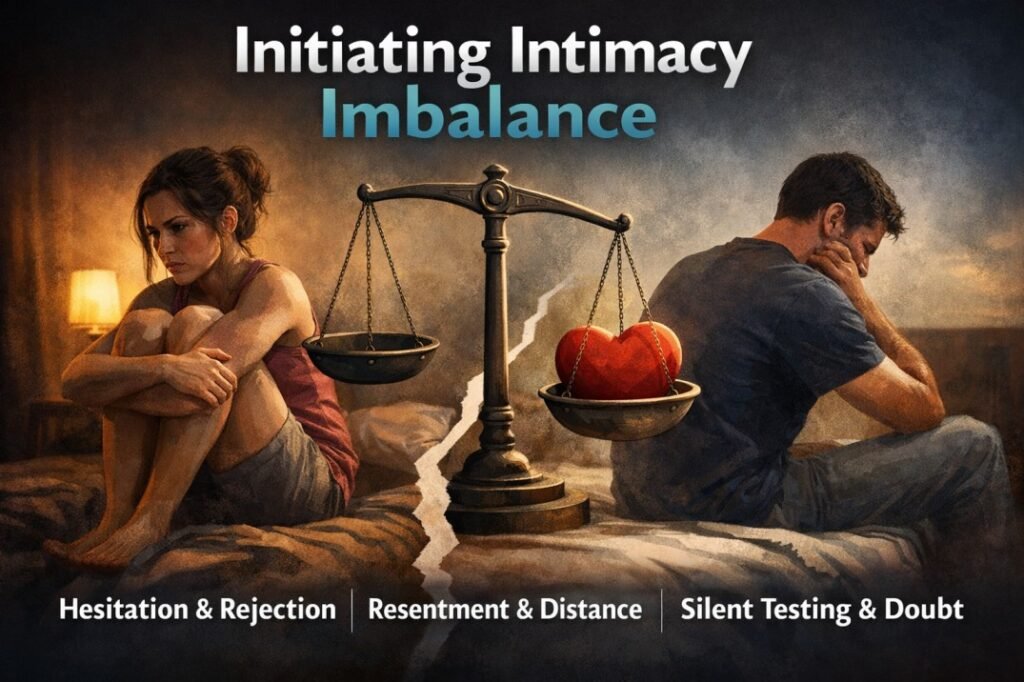
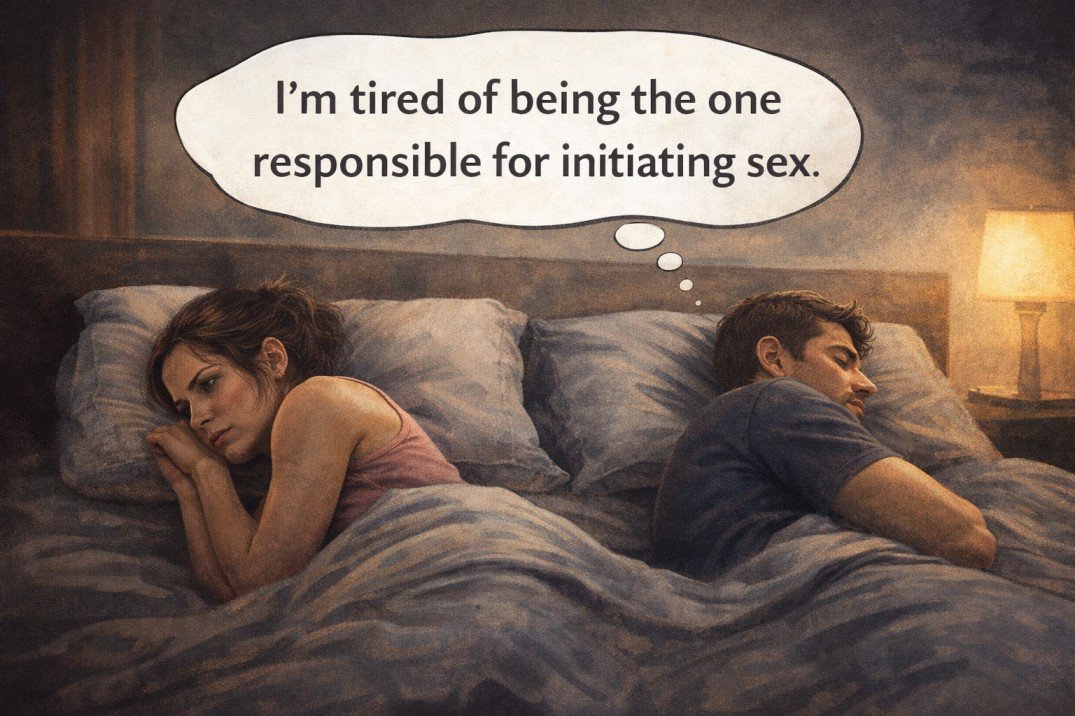
You kiss first. You send the flirty message. You move closer in bed. You are almost always the one who suggests sex.
After a while, the question changes from “Why don’t they initiate?” to:
“If I stopped trying, would anything happen between us?”
That can hurt even when your partner usually enjoys intimacy once you start it. You do not necessarily want more sex. You want to feel wanted without having to create every intimate moment yourself.
What Does Being Tired of Initiating Intimacy Mean?
Being tired of initiating intimacy means the effort has started to feel one-sided.
You may still have sex, but always being the person who starts it can leave you feeling:
- Unwanted
- Rejected
- Taken for granted
- Self-conscious about initiating
- Responsible for keeping intimacy alive
Before assuming your partner has lost attraction, look at how sex starts, what happens when you initiate, and what has changed between you.
12 Real Reasons Your Partner Never Initiates Sex or Intimacy
1. They May Experience Desire Differently
Some people think about sex first and then make a move. For others, interest develops after kissing, touching, flirting, or closeness has already started.
The International Society for Sexual Medicine explains responsive desire as desire that can arise in response to sexual activity or stimulation.
So your partner may rarely initiate yet become genuinely interested once you do.
If they usually remain uninterested even after you initiate, that fits better with why a partner may not want sex anymore.
2. Rejection Made Them Stop Trying
Maybe your husband, wife, boyfriend, or girlfriend used to initiate.
Then they heard “not tonight” enough times that they eventually decided:
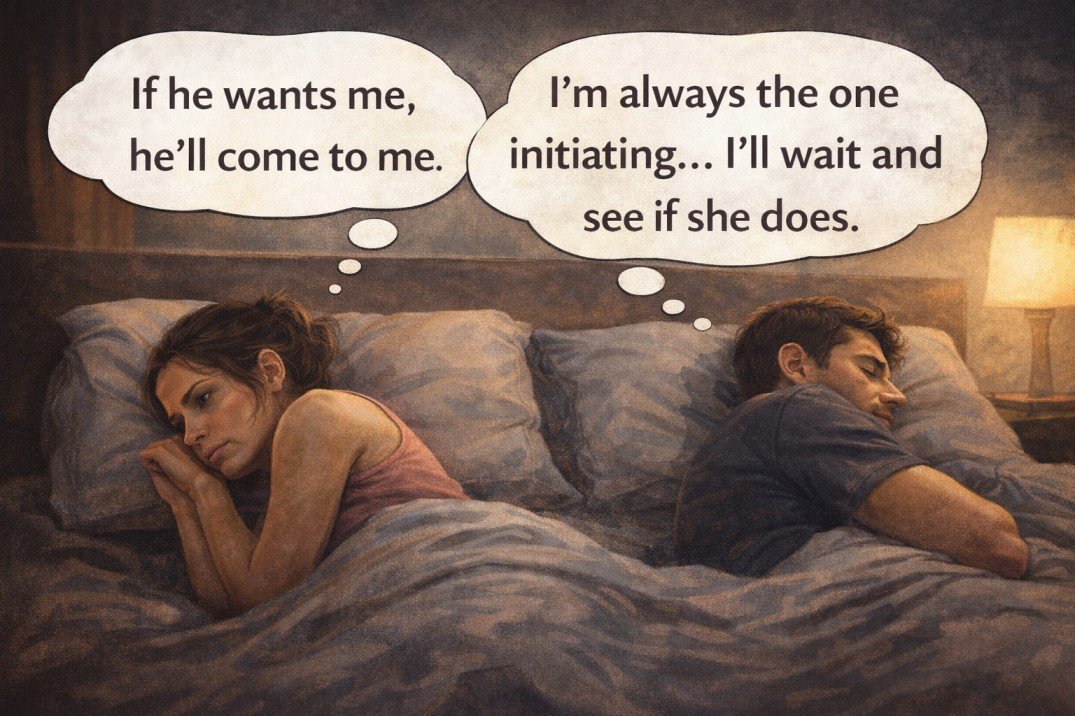
“I’ll wait until they want it.”
Nobody has to accept sex they do not want. But repeated rejection can still make the person initiating more cautious, embarrassed, or afraid of getting the timing wrong.
This is particularly relevant when someone stopped initiating after rejection rather than never initiating in the first place.
3. They Have Gotten Used to You Starting Everything
Sometimes there is no big psychological reason.
You initiated early in the relationship. Your partner responded. That became the routine.
Years later, you feel exhausted by it while they may genuinely think:
“That’s just how we work.”
Talk about the pattern before assuming both of you understand it the same way.
4. Sex Has Started Feeling Like Pressure
Sex can become harder to initiate when it is regularly discussed through complaints:
- “You never start anything.”
- “It’s been two weeks.”
- “You obviously don’t want me.”
- “Why do I always have to ask?”
Now initiating can feel like completing an obligation rather than expressing desire.
If your partner has started avoiding cuddling, kissing, or everyday affection because they worry it will lead to sex, read why your partner may have stopped touching you.
5. They Are Never in the Right Headspace
Imagine finishing work, answering messages, helping with children, speaking with family, scrolling through your phone and finally getting into bed exhausted.
Then your partner makes a sexual move.
For some people, desire needs more transition than that.
Things that may help include:
- Privacy
- Better sleep
- Time without phones
- Flirting earlier in the day
- A shower and time to unwind
- Going to bed before complete exhaustion
- Spending time together before initiating sex
Sometimes timing is doing more damage than attraction.
6. They Feel Pressure to Perform
Initiating can feel risky when sex has become a performance test.
Your partner may be worrying about:
- Erections
- Orgasm
- Stamina
- Body appearance
- Whether you enjoy sex
- Comparing themselves with pornography or past partners
After an embarrassing experience, waiting for you to initiate may feel safer because it confirms you are interested.
If this is part of the problem, LeapHope’s guide to sexual performance anxiety goes deeper into it.
7. Sex Has Become Too Predictable
Same time. Same bed. Same signals. Same routine.
Comfort is good for a relationship, but complete predictability can make sexual initiation feel less exciting.
Novelty does not need to mean doing anything extreme. Try:
- A proper date
- A night away
- Flirting during the day
- Changing the usual time
- More privacy
- Talking about what each person enjoys
- Breaking the usual sequence
If sex has become repetitive, these ideas for improving your sex life as a couple may be more useful than simply increasing frequency.
8. Hygiene or Attraction Has Become Awkward to Discuss
This is uncomfortable, which is exactly why some couples avoid talking about it.
Things such as poor oral hygiene, strong body odour, smoking breath, coming to bed sweaty, or a major drop in personal care can affect someone’s willingness to initiate.
Attraction can also change when a partner:
- Stops taking care of themselves
- Regularly criticises the other person
- Becomes disrespectful
- Changes significantly in habits or behaviour
Avoid humiliating your partner. But if something practical is affecting attraction, pretending it does not exist rarely helps.
9. Resentment Outside the Bedroom Is Following You Into It
One partner cooks, cleans, handles the children, remembers appointments and keeps asking for help.
Then at bedtime the other suddenly wants closeness.
Their internal response may be:
“Now you notice me?”
Sexual initiation can drop when resentment has built around:
- Household responsibilities
- Money
- Parenting
- In-laws
- Feeling unappreciated
- Repeated unresolved arguments
Sometimes fixing intimacy begins with something completely outside the bedroom.
10. Their Attention or Validation Is Going Somewhere Else
A change in initiation does not prove cheating.
But attention can shift.
Someone may become heavily absorbed in:
- Work
- Gaming
- Social media
- Pornography
- Constant messaging
- New friendships
- Attention from another person
Even harmless outside attention can sometimes feel exciting because it is new. A colleague compliments them. Someone online flirts. An old friend starts messaging again.
If secrecy, lying, hidden conversations, or crossed relationship boundaries appear too, that needs its own discussion. Reduced sexual initiation alone is not evidence of an affair.
11. They Don’t Feel Attractive Enough to Make the First Move
Your partner may want you but feel uncomfortable putting themselves forward sexually.
Body confidence can change after:
- Weight changes
- Pregnancy or childbirth
- Aging
- Hair loss
- Illness
- Scarring
- Sexual difficulties
- A hurtful comment about appearance
They may quietly decide:
“If my partner wants me, they’ll initiate.”
Then both people end up waiting for reassurance.
12. Their Mindset Says Someone Else Should Initiate
Some people still carry old rules about sex:
“Men should make the first move.”
“Women shouldn’t look too eager.”
“If she wants me, she’ll give me a sign.”
“If he really desires me, he’ll initiate.”
Culture, upbringing, previous relationships and gender expectations can all shape these beliefs.
There is no useful quota for how often a husband or wife should initiate. What matters is whether both partners feel able to express desire without shame or fear.
My Partner Never Initiates Sex but Enjoys It When I Do
This is where desire and initiation need to be separated.
If your partner usually responds, becomes interested, participates willingly and enjoys sex after you start it, they may not have a low-desire problem at all.
The conversation can be:
“I know we enjoy sex once it starts. But because I almost always initiate, sometimes I wonder whether you think about wanting me too.”
That explains what actually hurts.
Why Does It Hurt So Much to Always Initiate?
Because sex is only part of it.
You also want your partner to look at you and think:
“I want you.”
Always initiating can create questions such as:
- Would we have sex if I stopped?
- Do they actually find me attractive?
- Are they interested or simply agreeing?
- Why do I have to create every intimate moment?
You may be asking for reciprocal desire, not simply more frequent sex.
Should You Stop Initiating to See What Happens?
Silently testing your partner often creates more confusion.
You stop initiating because you want to see whether they make a move. They notice you have stopped and assume you are no longer interested.
Now nobody initiates.
Instead, say:
“I’ve become discouraged from always starting intimacy. I don’t want to withdraw from you, but I’d like this part of our relationship to feel more mutual.”
That gives your partner a fair chance to respond.
What If You Want Sex but Find Initiating Awkward?
Maybe you recognise yourself as the partner who rarely initiates.
Ask what stops you:
- Fear of rejection?
- Embarrassment?
- Worry about performance?
- Not knowing how to start?
- Waiting until you feel intense desire?
- Thinking your gender should not initiate?
- Assuming your partner will approach when interested?
Initiation can be simple:
“Come to bed early with me.”
“I’ve been thinking about you today.”
“I want some time alone with you tonight.”
You do not need to turn it into a performance.
How to Make Initiation Feel More Mutual
Talk About What Counts as Initiating
One partner may think a long kiss is an obvious invitation.
The other thinks:
“They were just kissing me.”
Ask what each of you actually does when you are interested.
Make “No” Safe
Nobody should feel punished for declining sex.
A warm response can still maintain connection:
“I’m exhausted tonight, but come cuddle with me.”
That makes future initiation less frightening.
Deal With Practical Problems
Do not turn every intimacy issue into deep psychology.
If hygiene is affecting attraction, discuss hygiene. If phones take over every evening, put them away. If resentment about chores is killing the mood, deal with the chores.
Add Some Novelty
Change the environment around intimacy before trying to force more initiation.
A date, a different routine, more privacy, flirting, time away from responsibilities, or simply going to bed before midnight can make a noticeable difference.
When Is Lack of Initiation a Bigger Problem?
Pay closer attention when:
- Your partner suddenly stops initiating
- Every initiation ends in rejection
- One person feels chronically unwanted
- Sex feels like an obligation
- Resentment is growing
- Physical affection has disappeared too
- Sexual difficulties are being avoided
- Conversations about intimacy are repeatedly dismissed
- Trust or secrecy has become an issue
The number of times each person initiates is less important than what the pattern is doing to the relationship.
When to Consider Professional Help
Support may help when you’ve discussed initiation repeatedly but keep returning to rejection, resentment, avoidance, performance worries, or sexual pressure.
For broader relationship patterns, online marriage counselling can help couples explore communication and intimacy together.
For sexual concerns, LeapHope also offers online sex therapy for adults and couples.
For clients in India, online sex therapy in India focuses on psychological and relationship-related concerns including desire differences, intimacy avoidance, sexual confidence and performance anxiety.
Final Thoughts
If you are tired of always initiating intimacy, do not automatically reduce the problem to “my partner doesn’t want me.”
Look at the actual pattern:
- Do they enjoy intimacy when you start it?
- Did they stop after repeated rejection?
- Does sex feel pressured?
- Is there unresolved resentment?
- Has routine killed the excitement?
- Is performance anxiety involved?
- Are hygiene or attraction issues being avoided?
- Is their attention constantly somewhere else?
- Do they simply expect you to initiate?
One honest conversation can tell you more than silently keeping score.
Try asking:
“When you want me, how do you usually show it?”
FAQs
Why does my partner never initiate sex?
Your partner may never initiate sex because they experience desire differently, fear rejection, feel pressured, lack sexual confidence, expect you to initiate, or have become used to the current pattern. Their response when you initiate can provide useful clues.
Why does my partner never initiate intimacy?
A partner may rarely initiate intimacy because starting closeness feels vulnerable, their signals are subtle, they expect you to lead, or previous rejection has made them cautious. Ask what initiation looks like to them before assuming they lack interest.
Why does my boyfriend never initiate sex?
Your boyfriend may never initiate sex because of rejection anxiety, performance worries, responsive desire, sexual shyness, stress, or an established habit of waiting for you. Notice whether he becomes interested and engaged after intimacy begins.
Why doesn’t my boyfriend initiate intimacy anymore?
If your boyfriend used to initiate and stopped, consider what changed around the same time. Stress, repeated rejection, relationship tension, sexual confidence, attraction, resentment or changes in desire can all affect willingness to make the first move.
Why has my husband stopped initiating sex?
Your husband may stop initiating sex after rejection, stress, performance concerns, resentment or a change in desire. He may also have started waiting for you because he no longer feels confident that his advances are welcome.
Why did my husband stop initiating after rejection?
Your husband may have stopped initiating after rejection because he expects another refusal or assumes you will approach him when interested. If you now want him to initiate again, tell him directly rather than assuming he knows.
Why does my wife never initiate intimacy?
Your wife may rarely initiate because of responsive desire, stress, sexual-role expectations, embarrassment, body-image concerns, fear of rejection or an established relationship pattern. Ask how she experiences initiation instead of treating it as proof of low attraction.
Why does my girlfriend never initiate sex?
Your girlfriend may rarely initiate because she feels awkward making the first move, expects you to lead, fears rejection or becomes interested only after closeness begins. A sudden change is more important to investigate than a long-standing pattern.
Why do I feel disappointed when my partner doesn’t initiate sex?
You may feel disappointed because initiation represents being actively desired. When you always make the first move, you can start wondering whether your partner would choose sexual intimacy without being prompted.
What happens if I stop initiating sex?
If you stop initiating without explaining why, your partner may interpret the change as your own loss of interest. If initiating has become emotionally exhausting, explain that you want intimacy to feel more shared instead of silently testing them.