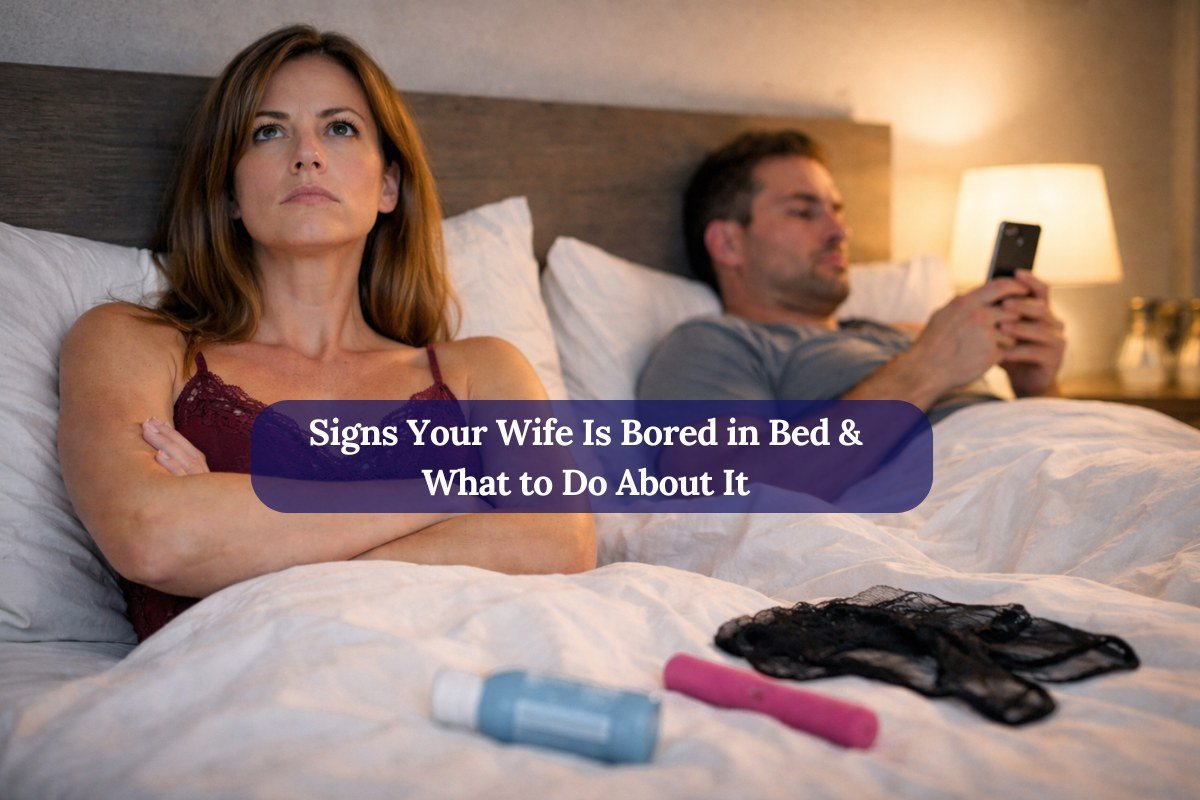
Does boredom in bed automatically mean something is wrong between you?
For most couples, no. Changes in intimacy often happen quietly. A wife may seem less interested, less present, or just going through the motions, and it’s easy to take that personally.
In many marriages, boredom in bed isn’t about attraction fading. It’s about repetition, emotional distance, tiredness, or feeling mentally elsewhere. Love can still be there, even when intimacy feels flat.
What makes this confusing is that boredom rarely shows up as a clear complaint. It shows up in small shifts, less curiosity, less engagement, less warmth. If you don’t know what to look for, it’s easy to misunderstand what’s happening.
This article walks through 13 common signs your wife may be bored in bed, and then looks at what actually helps, without blame, pressure, or unrealistic expectations.
Being bored in bed doesn’t mean your wife doesn’t care or isn’t attracted to you. Most of the time, it means her mind isn’t engaged, even if her body is present.
In long-term relationships, intimacy can start to feel predictable. When emotional connection, novelty, or mental presence drops, sex can turn into something familiar but empty. That’s when boredom sets in.
This kind of boredom is often quiet. She may still participate, but without enthusiasm. She may respond rather than initiate. She may seem distracted or disconnected. None of this means she’s rejecting you. It usually means intimacy has lost its meaning for her.
Understanding this difference matters. Sexual boredom is about disengagement, not refusal. When that’s clear, it becomes easier to respond without defensiveness or pressure.
If boredom or disengagement has been going on for a long time, professional support through online marriage counselling can help both partners talk in a safe, structured way.
Sexual boredom usually isn’t loud. There’s no clear complaint and no sudden refusal. Things just feel flatter than before. Because of that, it’s easy to guess the wrong reason.
Many partners assume boredom means loss of attraction. Often, it doesn’t. It usually means her mind isn’t fully there. She may be tired, emotionally distant, or stuck in a routine that feels empty.
Another reason it’s misread is silence. Many women don’t say they’re bored because they don’t want to hurt feelings or start an argument. So the feeling shows up in small ways, less interest, less warmth, less effort.
When boredom is taken personally, pressure follows. When it’s seen as a sign of disconnection, it becomes easier to handle without blame.
These signs are about patterns, not one bad night. Seeing one sign once doesn’t mean much. Seeing several, over time, usually means something needs attention.
During intimacy, her body may be present, but her attention isn’t. She looks distracted, quiet, or checked out. Eye contact is brief, and there’s little emotional response.
This usually isn’t disinterested in you. It’s a sign her mind isn’t engaged. When intimacy becomes routine or emotionally flat, the body may participate while the mind drifts.
Mental absence is often the first sign of boredom, and it tends to appear before any clear physical avoidance.
You may notice that you’re almost always the one starting things. She responds when you initiate, but rarely begins on her own.
This doesn’t always mean low desire. Often, it means intimacy doesn’t feel motivating for her anymore. When something feels repetitive or emotionally empty, people stop reaching for it.
Initiation usually drops before interest disappears completely. It’s often an early sign that intimacy no longer feels exciting or meaningful to her.
Physical closeness starts to follow the same pattern every time. The timing, the pace, even the way things begin and end feel familiar.
When intimacy becomes predictable, curiosity fades. There’s nothing new to pay attention to, so engagement drops. This isn’t about creativity or effort. It’s about the absence of emotional presence.
Routine intimacy often keeps things functioning, but it rarely keeps them alive. Over time, this predictability can turn into boredom without anyone saying it out loud.
When boredom lasts, intimacy often reduces over time. This article on lack of sex in a relationship explains how emotional distance slowly affects physical closeness.
She doesn’t refuse intimacy, but she doesn’t seem fully involved either. She participates, but without much response, enthusiasm, or warmth.
This often happens when saying no feels harder than saying yes. Going along feels easier than explaining how disconnected things feel. Over time, this turns intimacy into something she tolerates rather than looks forward to.
This sign matters because it’s easy to miss. On the surface, intimacy is still happening. Underneath, interest and emotional presence are fading.
Intimacy feels rushed or cut short. She may pull away soon after things start, or seem eager for it to be over.
This usually isn’t about time or energy alone. When closeness doesn’t feel engaging, the body looks for an exit. Ending it quickly reduces discomfort without having to explain anything.
Over time, this pattern can repeat. Intimacy still happens, but it doesn’t linger, and that’s often a sign boredom has set in.
In many marriages, this shows up quietly. A husband notices something feels off and tries to talk about it. The moment sex or intimacy comes up, she changes the topic, goes quiet, or says she’s tired of discussing it.
In real life, this often isn’t because she doesn’t care. It’s because she doesn’t have clear words for what feels wrong. Saying “I’m bored” feels harsh. Saying “nothing’s wrong” feels easier.
Over time, avoiding the conversation becomes a way to avoid discomfort. But the silence doesn’t fix the boredom, it just hides it.
Often, boredom in bed doesn’t start in bed. It shows up earlier, in everyday moments. Conversations feel shorter. Affection outside intimacy drops. She seems more inward or less responsive in general.
In real marriages, this pattern is common. When emotional connection weakens, physical intimacy usually follows. Sex starts to feel like a task instead of a shared moment.
This is why focusing only on what happens in bed rarely works. When emotional distance grows during the day, boredom shows up at night.
You may notice that intimacy mostly happens only after you start it. She doesn’t resist, but she also doesn’t lead. She waits, reacts, and follows rather than showing her own interest.
In real relationships, this often means intimacy doesn’t feel inviting to her anymore. When something feels flat or repetitive, people stop reaching for it on their own. Responding feels easier than wanting.
This pattern matters because it shows a shift from shared desire to one-sided effort. Over time, that imbalance can quietly deepen boredom if it isn’t noticed.
Intimacy starts to feel serious or flat. There’s less laughter, teasing, or relaxed closeness. Everything feels functional rather than shared.
In real life, many couples notice this slowly. Nothing is “wrong,” but nothing feels light either. When playfulness disappears, intimacy can start to feel like a routine instead of a connection.
This matters because warmth and ease are often what keep intimacy engaging. When they fade, boredom can settle in even if everything else looks fine on the surface.
She may say she’s tired, busy, not in the mood, or suggest “another time” more often than before. Each reason sounds reasonable on its own. Together, they form a pattern.
In real life, avoidance usually isn’t about one excuse. It’s about not wanting to enter something that feels dull or disconnected. Delaying feels easier than explaining why intimacy no longer feels inviting.
This sign matters because avoidance is often a response to boredom, not rejection. The body chooses distance when closeness doesn’t offer anything emotionally rewarding.
Physical intimacy depends on comfort and emotional presence, not just sex. This article on physical intimacy in marriage explains how closeness is shaped over time.
You may notice that intimacy only happens when everything lines up perfectly: the timing, the mood, the absence of stress. If one small thing is off, her interest drops.
In real marriages, this often means desire no longer feels spontaneous for her. When intimacy feels dull or emotionally thin, the body needs very specific conditions to engage.
This isn’t manipulation or lack of love. It’s usually a sign that closeness no longer feels rewarding on its own, so desire depends on the situation feeling just right.
Instead of feeling closer or more relaxed afterward, she seems distant, quiet, or slightly irritated. Small comments turn sharp, or she pulls away emotionally.
In real life, this often confuses partners. Intimacy happened, so why does the mood feel worse? Usually, it’s because the experience felt empty or forced for her. The body expected a connection but didn’t receive it.
When intimacy doesn’t meet an emotional need, frustration can follow instead of relief. This sign matters because it shows boredom isn’t just during intimacy, it lingers after.
If boredom overlaps with discomfort, control issues, or withdrawal, free online counselling for abusive relationships offers a safe, confidential place to explore those feelings.
This one shows up quietly but clearly over time. After intimacy ends, she relaxes in a way that feels more like relief than closeness. She shifts focus quickly or becomes emotionally distant.
In real marriages, this often means intimacy feels like something to get through rather than something to enjoy. Relief appears because the pressure is gone.
This sign matters because relief after intimacy usually points to boredom or emotional disconnect, not lack of love.
Sexual boredom can be normal at times. Long marriages go through phases. Stress, health issues, emotional load, routine, or exhaustion can all lower interest for a while. In these phases, boredom usually comes and goes. It doesn’t change how you relate to each other overall.
Boredom is more likely normal when:
It’s more likely not just a phase when:
If you’re exploring intimacy, emotional blocks, or boredom in a broader life context, LeapHope’s online therapy and counselling services can provide consistent support.
When boredom shows up, the instinct is to fix it fast. Most of the time, that instinct backfires.
What usually makes it worse
These responses add pressure. Pressure makes boredom deeper, not lighter.
What actually helps
Sometimes outside help really does help, but only when it’s used the right way.
Professional support can be useful when boredom has been there for a long time, and nothing changes, even after you’ve tried talking. It’s especially helpful when conversations keep ending in silence, defensiveness, or confusion.
What usually helps in these settings isn’t sex advice. It’s having someone slow things down and look at patterns. Things like emotional distance, unspoken resentment, or feeling unheard often sit underneath boredom. When those start to shift, intimacy often changes without being forced.
Professional help doesn’t work well when one person is pushed to change or when the focus is only on having more sex. It works best when the goal is understanding, not fixing.
When intimacy issues feel complicated, working with one of the licensed professionals on our therapists team can provide personalised insight and support.
Sexual boredom in marriage is rarely about effort or attraction alone. More often, it’s about feeling disconnected, unseen, or stuck in a pattern that no longer feels meaningful. That’s why trying harder or changing things on the surface usually doesn’t help.
The signs in this article aren’t meant to blame or label your wife. They’re meant to help you notice patterns that often go unspoken. Boredom is usually a signal, not a verdict on the relationship.
When intimacy feels flat, the most helpful response is curiosity, not pressure. Paying attention to emotional closeness, everyday connection, and how safe intimacy feels can shift things more than any quick fix. Real change tends to come from understanding what’s missing, not forcing what used to work.
Yes. Long-term relationships often fall into routines. Boredom usually comes from repetition, stress, or emotional distance, not from lack of love or attraction. Sexual boredom is often confused with loss of sexual desire, even though the two are not the same.
Not always. Many women still feel attracted but mentally disconnected. Boredom is more about engagement than desire.
Confronting rarely helps. Calm conversations about how intimacy feels different tend to work better than direct accusations.
Sometimes, if it’s caused by stress or temporary life changes. If it lasts for months, it usually needs attention rather than time.
No. Low libido is about desire. Boredom is about interest and engagement. A person can have a desire and still feel bored.
Many women avoid the topic to prevent hurt feelings or conflict. Avoidance often means confusion, not indifference.
Not by itself. Without emotional connection, changes in behaviour rarely solve boredom and can increase pressure.
Yes. Emotional disconnection often shows up physically later. Intimacy usually reflects what’s happening outside the bedroom.
Boredom is rarely one person’s fault. It usually develops from shared patterns over time.
If boredom has lasted a long time, conversations go nowhere, or resentment is growing, outside help can be useful.
Sexual rejection from a wife or girlfriend hurts deeply for many men because it activates…
In online therapy, we meet many men who ask the same question: “Why do I…
Your teen snaps at small things like chores, comments, or even jokes. Sometimes they slam…
Your teen is still at home, still going to school, still doing what needs to…
Your teen used to talk more. Now conversations feel shorter, or don’t happen at all.…
Your child keeps saying their stomach hurts. Or their head. Or their body feels tired…