You can get hard watching porn in seconds.
But with someone you actually like?
Nothing. Just awkward silence in your body.
This isn’t rare:
So what’s going on?
Quick answer:
Here’s the good news:
Porn-induced erectile dysfunction (PIED) isn’t an official medical diagnosis but it’s a phrase men use to describe a real experience: being able to get hard with porn but struggling during actual sex.
It’s not the same as occasional performance issues. Most guys have nights where stress, alcohol, or anxiety get in the way. PIED feels different: it’s consistent. You can scroll through videos and feel instantly turned on, but with a real partner, your body doesn’t respond.
Why does this happen? For some, it’s about conditioning. High-intensity porn trains your brain to expect instant novelty, endless variety, and zero performance pressure. Real sex is slower, more intimate, and comes with real-world variables like nerves and expectations. That gap can create frustration and, over time, avoidance.
Ten years ago, erectile dysfunction was mostly seen as an “older man’s problem.” But, the story looks very different: rates of ED among men under 30 have doubled compared to a decade ago.
Why? A mix of factors is at play:
On forums like Reddit, young men describe the same cycle: they can perform when watching porn but feel disconnected during real sex. Others say they’re so worried about whether they’ll “get hard” that the anxiety itself kills arousal.
This doesn’t mean every case of ED is “caused by porn.” It means young men today are navigating a perfect storm: screens, stress, and cultural pressure colliding with their sex lives.
When you watch porn, your brain lights up with dopamine, the “want more” chemical. Each new video, each new tab, gives you another hit. Over time, your brain can start craving that constant novelty to stay aroused.
Here’s what that means in real life:
Scientists call this desensitization. Your brain adapts to high stimulation, so “ordinary” intimacy feels muted. Pair that with real-world nerves, fear of rejection, pressure to perform, and erections can stall out.
Important reality check:
So it’s not about blaming porn itself. It’s about noticing whether the patterns you’ve built online are clashing with what you want offline.
Not every case of ED comes from porn. But there are a few patterns that come up again and again when guys talk about it online.
You might be dealing with porn-related ED if:
On Reddit and Quora, men describe the same loop: “I can watch porn for hours, but with my girlfriend, I go soft.” That gap between screen arousal and partner arousal is often the red flag.
Important: these signs don’t mean porn is the only cause. Stress, health, and relationship dynamics can overlap. But if the difference between solo and partner sex feels huge and porn is the one constant, it’s worth paying attention.
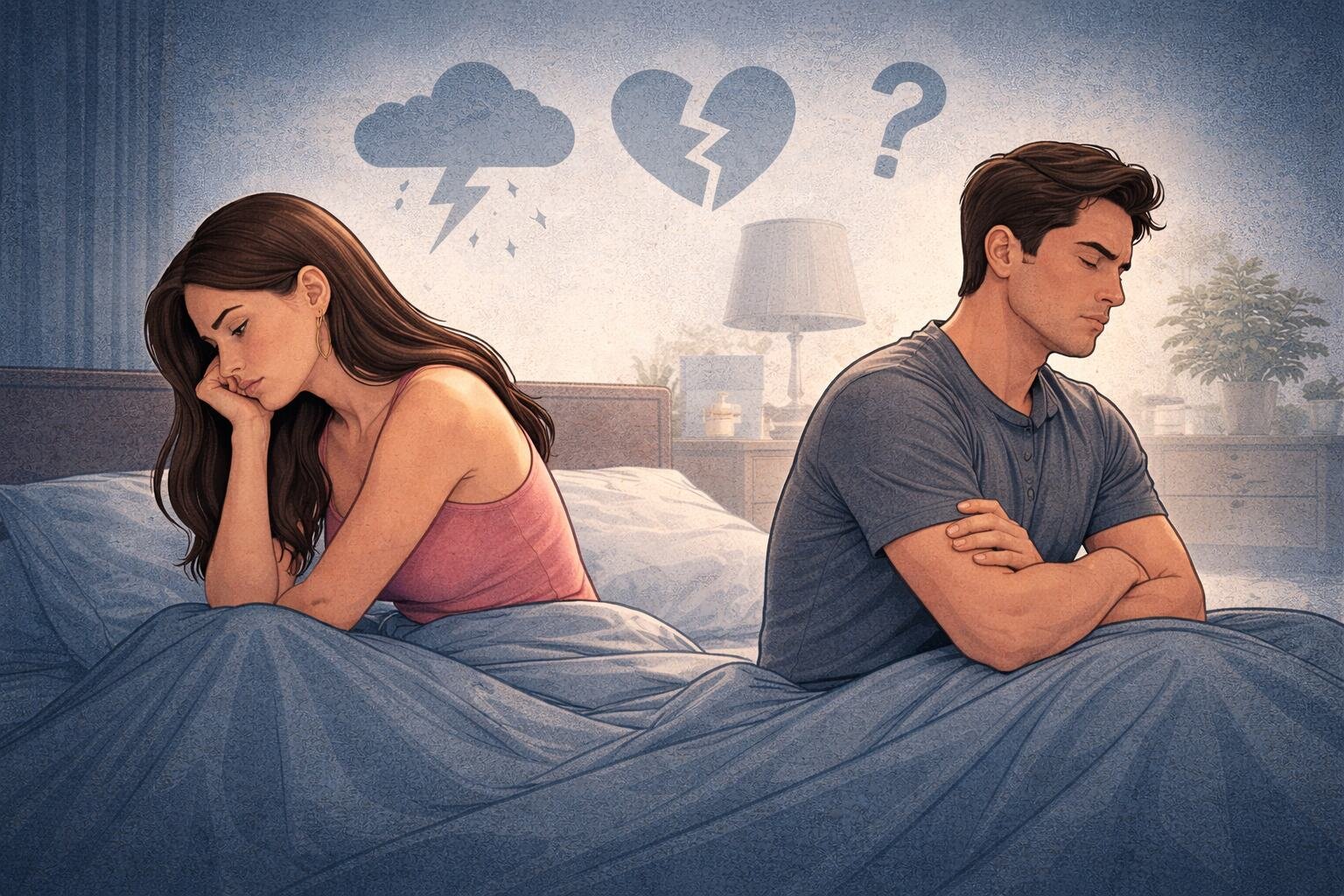
Porn-related ED doesn’t just mess with your body; it changes how you and your partner feel about each other.
Common reactions partners share:
On forums, you see couples describing the same spiral: one partner avoids sex out of fear of failure, the other feels unwanted, and the emotional gap widens.
Here’s the truth: this doesn’t mean love is gone. It means unspoken stress is sitting in the bedroom with you. And naming it, instead of hiding it, is usually the first step to breaking the cycle.
A common question in forums: “If I quit porn, will my erections come back?” The short answer is: often, yes but it takes time.
Many guys try what’s called a “porn detox” or “dopamine reset.” The idea is simple: stop watching porn, give your brain a break, and let real-life intimacy start feeling exciting again.
What recovery can look like:
But here’s the key: quitting porn alone isn’t always enough. Some men find they still need to address stress, relationship issues, or physical health.
Think of it less like a “quick detox” and more like retraining your brain. It’s not about never watching porn again, it’s about proving to yourself that you can get turned on by real connection.
Quitting porn can help, but for many men, it’s only part of the solution. Doctors and therapists are seeing more young men who need a full approach to tackle ED.
Here are options that often make a difference:
The biggest shift? Not seeing ED as proof you’re broken. It’s a signal that something in your mind–body system is out of balance. And that means it’s fixable with the right support.
For a lot of men, this is the hardest part. You don’t want to admit you can’t get hard. You don’t want to admit porn might be part of it. But silence usually makes things worse.
Here’s how guys are learning to handle it:
Many men on Reddit describe how just saying it out loud lifted pressure in the bedroom. Often, once the secret is out, intimacy becomes less about “performing” and more about exploring together.
The truth is: your partner probably cares less about porn than about feeling chosen. Showing them you want real connection can matter more than getting it perfect every time.
Sometimes ED isn’t just about porn. It can be a sign of stress, anxiety, or even a medical issue.
See a doctor or therapist if:
What to expect:
This isn’t just Reddit talk; scientists and clinicians are noticing the same trend.
So the consensus? Porn can affect erections especially if it becomes your default way of getting aroused. But it’s rarely the only factor.
If you’re struggling to get hard without porn, you’re not alone and you’re not doomed. More young men are facing this than ever before. The good news? Brains and bodies can reset. With time, support, and small changes, intimacy can feel exciting again.
If erectile difficulties are affecting your confidence or relationship, confidential online sex therapy can help you understand the root cause and regain healthy, pressure-free intimacy.
For more background on how pornography affects sexual health, the Effects of Pornography article on Wikipedia offers a deeper overview of its impact on arousal, relationships, and erectile dysfunction.
For some men, yes. Constant exposure to high-speed, high-novelty porn can overstimulate the brain’s reward system. Over time, real-life intimacy may not trigger the same level of arousal. However, porn is rarely the only factor. Stress, anxiety, and lifestyle habits usually contribute as well.
Erectile dysfunction in men under 30 and under 40 has become more common in recent years. Studies suggest that a significant number of younger men report some level of erectile difficulty, often linked to stress, digital overstimulation, and performance pressure.
If erections are strong during porn use but weak during real intimacy, porn conditioning may be involved. If erectile issues appear during stressful situations or with specific partners, anxiety may be the main trigger. In many cases, both factors overlap.
Reducing or stopping porn can improve symptoms for many men, especially when porn is a major trigger. However, recovery also depends on managing stress, improving sleep, and reducing performance pressure. Long-term change often requires broader lifestyle adjustments.
Recovery time varies. Some men notice improvement within a few weeks, while others may need a few months. Early signs of improvement can include stronger morning erections and reduced anxiety during intimacy.
Medication can help temporarily by improving blood flow. However, if the root cause is psychological or related to overstimulation, medication alone may not resolve the issue long term. Habit and mindset changes are often necessary.
While not officially classified as a separate medical diagnosis, compulsive porn use is taken seriously by therapists and sexual health professionals. If it interferes with relationships, work, or self-esteem, it is worth addressing with professional support.
Yes. It can lead to feelings of rejection, insecurity, and emotional distance between partners. Honest communication and reducing secrecy often help rebuild intimacy and reduce pressure around performance.
Your teen used to talk more. Now conversations feel shorter, or don’t happen at all.…
Your child keeps saying their stomach hurts. Or their head. Or their body feels tired…
Your child speaks confidently. They manage school, conversations, and new situations well. From the outside,…
Your child doesn’t look afraid. They go to school. They talk to people. They seem…
Your child used to be calm. Not perfect, but steady. Easy to talk to. Rarely…
Your child starts crying, and you don’t see a clear reason. Nothing big happened. No…