
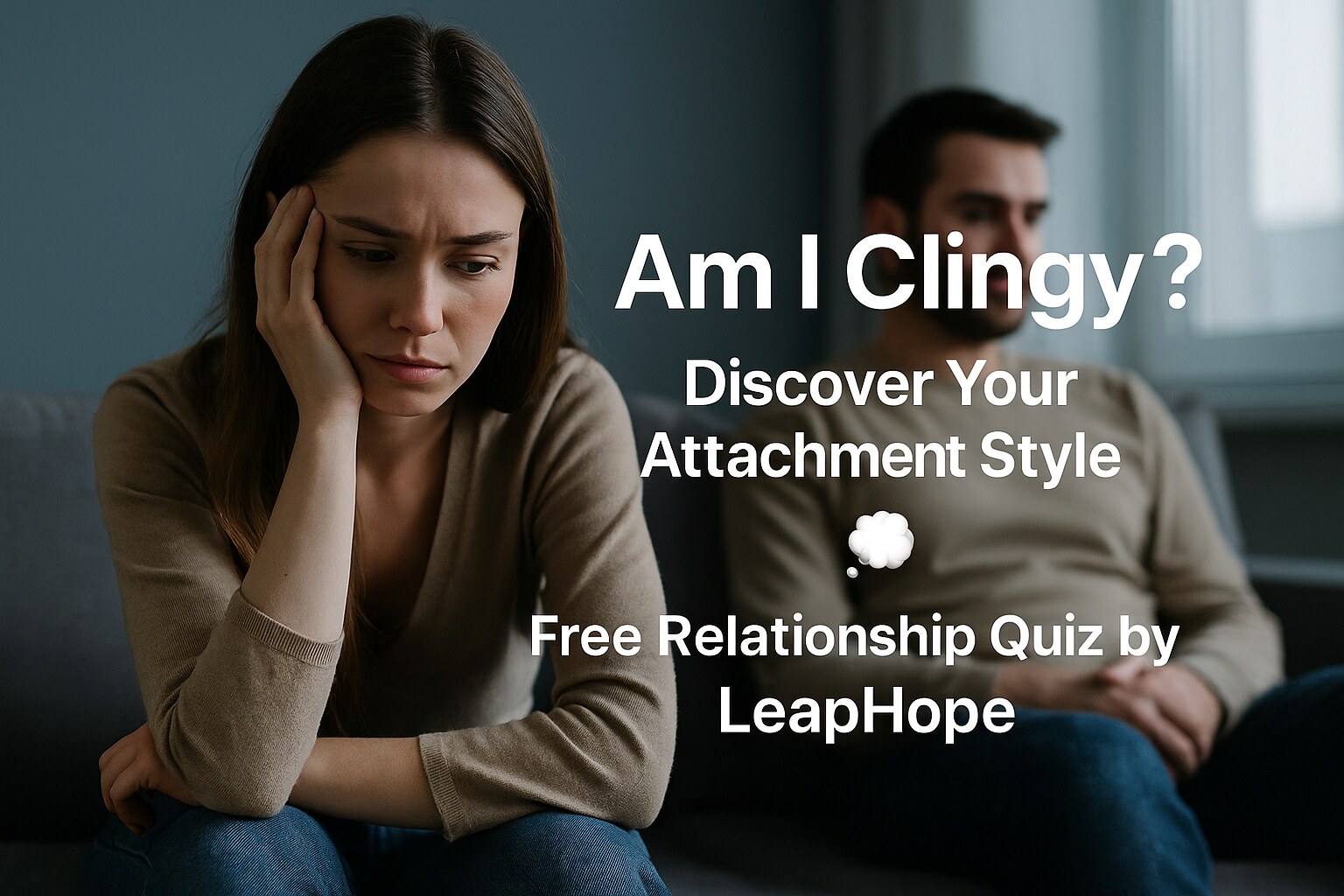
Am I Clingy? Take the Free Clingy Quiz
Wondering if you're too clingy in a relationship? This free quiz explores how you handle texting, reassurance, closeness, jealousy, emotional distance and your partner needing space.
Start the Clingy QuizFree · Private · Takes 4–5 minutes
Free Relationship Quiz
Am I Clingy? Find Out in 4–5 Minutes
Do you overthink slow replies, need frequent reassurance, or worry when someone you care about wants space?
Answer 15 short questions to explore whether you tend to seek extra reassurance, balance closeness with independence, or feel comfortable giving people space.
For self-reflection only. This quiz is not a psychological diagnosis.
Question 1 of 15
About Your Results
How This Am I Clingy Quiz Works
This free Am I Clingy Quiz looks at everyday patterns that can make someone wonder, “Am I being too clingy?” The questions explore reassurance, texting, closeness, emotional distance, personal space and how you respond when someone you care about is less available.
Your answers can help you notice whether you generally feel comfortable with closeness and independence, or whether you tend to seek more reassurance when a partner, boyfriend, girlfriend or friend feels distant. These patterns can sometimes overlap with relationship anxiety or attachment concerns, but they do not automatically mean something is wrong.
If fear of rejection, reassurance-seeking or emotional distance is regularly affecting your relationships, learn how relationship anxiety and attachment therapy can help you understand the pattern more deeply.
Understand Your Result
What Your Am I Clingy Quiz Result Means
Your result reflects how you answered questions about reassurance, texting, emotional distance, personal space and closeness. It can help you notice whether you tend to seek more reassurance, move between closeness and independence, or feel comfortable with space.
If you came here wondering “How clingy am I?” or “Am I being too clingy?”, look at the pattern that sounds closest to your result below. These are patterns for self-reflection, not attachment-style diagnoses.
Stronger Clingy or Reassurance-Seeking Patterns
You may become especially alert to changes in contact, replies or emotional closeness. A delayed message, different tone or request for space might leave you wondering whether something has changed in the relationship.
You might respond by checking in more often, looking for reassurance, watching someone's online activity or finding it difficult to focus until you feel sure that everything is okay.
Reassurance-seeking can sometimes overlap with attachment anxiety, particularly when uncertainty or fear of rejection is involved. But these behaviours can also depend on the relationship, past experiences and what is happening at the time.
A Mix of Closeness and Independence
You may usually feel comfortable with closeness while still having your own routines, friendships and interests. However, some situations can make you want more reassurance than usual.
For example, you might overthink a slow reply when a relationship already feels uncertain, but feel completely comfortable with the same situation when trust feels strong.
This is why being clingy is not always an all-or-nothing personality trait. The way you respond can change between relationships and even at different times within the same relationship.
More Comfortable With Space and Independence
Your answers suggest that you are generally comfortable staying connected to someone without needing frequent reassurance or constant contact.
You may find it easier to tolerate delayed replies, separate plans and changes in another person's availability without immediately assuming that something is wrong.
This result does not automatically mean you have a particular attachment style. It simply means that the behaviours measured by this clingy test appeared less strongly in your answers.
This free clingy quiz is designed for self-reflection only. It does not diagnose an attachment style, relationship problem or mental health condition.
Clinginess in Relationships
How to Know If You're Too Clingy in a Relationship
What is considered being clingy can look different from one relationship to another. Wanting closeness or reassurance is not automatically a problem. It becomes more useful to look at how often the need appears, what triggers it, and whether it starts affecting your mood, boundaries or daily life.
A delayed text may quickly make you wonder whether the other person is upset, losing interest or pulling away.
You may often need to hear that the relationship is okay, especially after a small change in someone's mood or behaviour.
Separate plans, time alone or less contact may feel threatening even when there is no clear sign that the relationship has changed.
You might closely watch someone's tone, online activity, last seen, messages or social behaviour for signs that something is wrong.
You may cancel plans, stay constantly available or find it difficult to focus on your own interests when the relationship feels uncertain.
When something feels different, you may feel a strong urge to text, check, ask questions or get reassurance immediately.
Does Being Clingy Mean You Have Anxious Attachment?
Not necessarily. Some reassurance-seeking and sensitivity to emotional distance can overlap with attachment anxiety, but the same behaviour can happen for different reasons and may change depending on the relationship or situation.
Research on adult attachment has found that people higher in attachment anxiety may worry more about rejection or abandonment and seek greater closeness or reassurance when relationships feel uncertain. Read the research on adult attachment and relationships .
The purpose of your clingy quiz result is not to give you a label. Look instead for the situations that trigger reassurance-seeking, overthinking or difficulty with space. Those patterns usually tell you more than the word “clingy” by itself.
Common Questions
Am I Clingy Quiz FAQs
Clinginess can look different with a partner, boyfriend, girlfriend or friend. These answers can help you understand some of the patterns behind reassurance, closeness and space.
Am I too clingy to my boyfriend or partner?
Wanting regular contact or reassurance does not automatically mean you are too clingy. Look at whether delayed replies, separate plans or requests for space regularly make you anxious, lead to repeated checking, or make it difficult to focus on your own life.
Am I clingy or is my partner just distant?
It can be difficult to tell from one behaviour alone. You may be seeking frequent reassurance, your partner may be less emotionally available, or both patterns may be happening together. Look at the overall pattern of communication, consistency, closeness and how each of you responds to the other's needs.
Can I be too clingy with my friends?
Yes, reassurance-seeking and difficulty with space can also appear in friendships. You might worry when a friend replies slowly, feel strongly affected by being left out, or need frequent signs that the friendship is still secure.
Is being clingy the same as being needy?
Not necessarily. Both words are informal labels rather than psychological diagnoses. Behaviours described as clingy or needy can include frequent reassurance-seeking, difficulty tolerating uncertainty, or wanting more contact than the other person is comfortable with.
Why do I become clingy when someone pulls away?
Distance can create uncertainty about where you stand with someone. For some people, that uncertainty increases worry, overthinking or reassurance-seeking. Past relationship experiences, current trust and attachment-related anxiety can all influence how strongly you respond.
Can someone be clingy in one relationship but not another?
Yes. Reassurance-seeking and comfort with space can change between relationships. Trust, communication, previous experiences, conflict and how emotionally available the other person feels can all affect how you respond.
Is the Am I Clingy Quiz a psychological test?
No. The Am I Clingy Quiz is a self-reflection tool designed to help you notice patterns around reassurance, closeness, texting and personal space. It does not diagnose an attachment style, relationship problem or mental health condition.