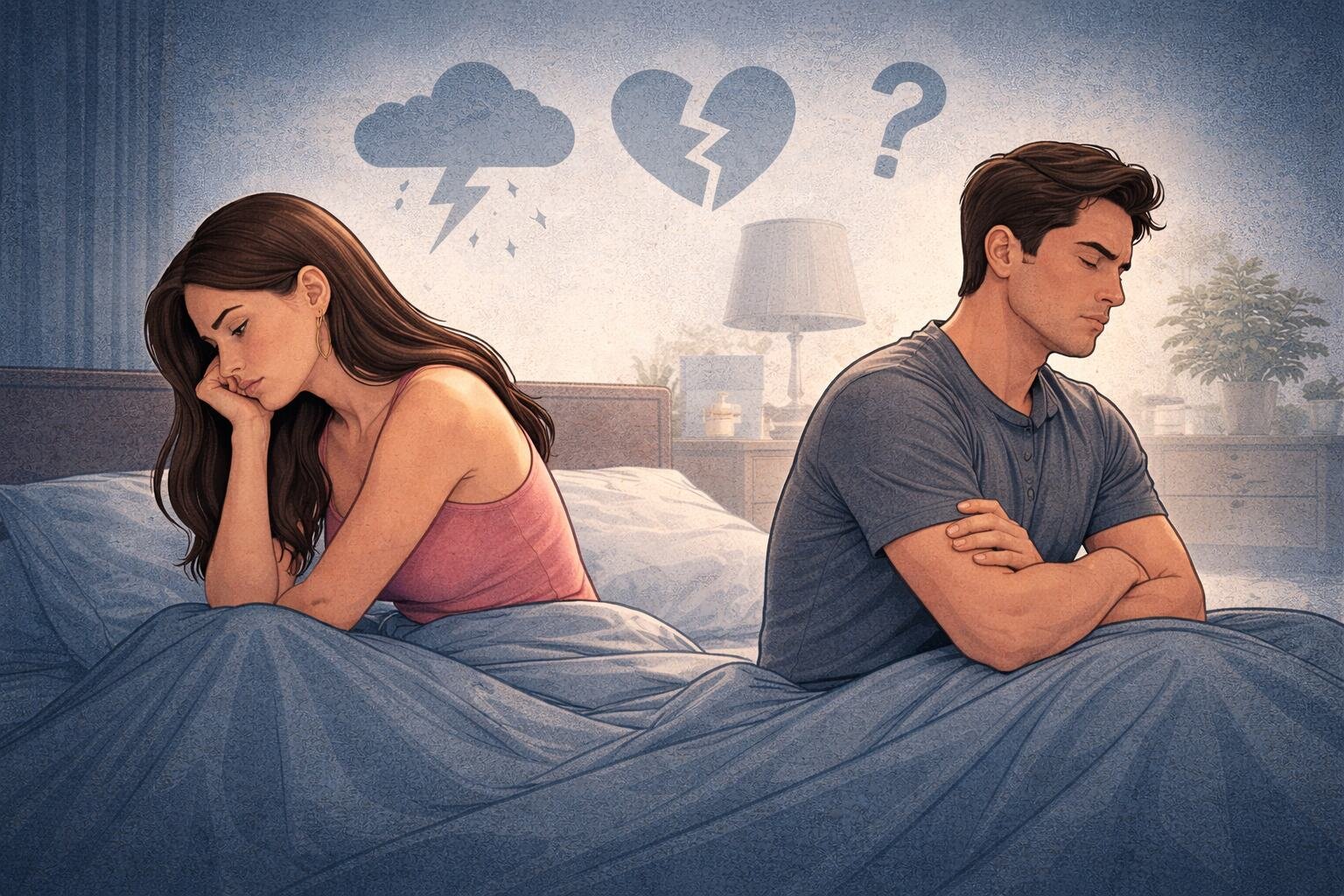
In online therapy, we meet many men who ask the same question: “Why do I feel empty after sex even though it was good?” Some say, “I love my wife, but after sex I suddenly want to distance myself.”
Post-sex emptiness is a sudden emotional drop after intimacy. The body feels relaxed, but the mood feels flat or distant. It is not the same as regret or lack of attraction.
Clinically, this can overlap with postcoital dysphoria, which refers to sadness, irritability, or emotional discomfort after consensual sex, even when it was pleasurable.
After orgasm, dopamine decreases and prolactin increases. The nervous system shifts from arousal to recovery. For some men, that shift feels like emptiness rather than calm.
Sex also activates attachment systems. Intimacy increases emotional exposure. In modern relationship culture shaped by performance pressure, porn expectations, casual dating, and social comparison, that vulnerability can feel uncomfortable once the intensity fades.
Feeling distant after sex does not automatically mean you do not love your partner or lack desire. It often reflects how your brain and attachment patterns process closeness.
Many men notice the same pattern. Sex feels satisfying and connected in the moment. Then shortly after orgasm, the mood shifts. You may feel flat, distant, or slightly low, and wonder why it changed so quickly.
Physical pleasure and emotional fulfilment are regulated by different systems in the brain. Sexual stimulation activates reward pathways. Emotional closeness activates attachment systems. These systems do not always stay aligned after orgasm.
During arousal, dopamine increases. After orgasm, dopamine decreases and prolactin rises. The nervous system shifts from high stimulation to recovery. That shift can feel abrupt, especially after intense pleasure. A temporary emotional flattening after this shift can be normal.
The stronger the peak, the more noticeable the contrast. This explains why you can feel good during sex but strange afterwards.
Sex also increases emotional openness. If vulnerability feels uncomfortable or unfamiliar, the calm that follows intimacy can register as disconnection rather than relaxation.
A fast emotional change after orgasm does not automatically mean something is wrong. In many cases, it reflects how the brain and attachment system transition from arousal to regulation.
Postcoital dysphoria, often shortened to PCD, refers to feelings of sadness, irritability, emotional discomfort, or withdrawal after consensual sex. The sex may have been wanted and physically pleasurable, yet the mood afterwards shifts in a negative direction.
Yes, it happens to men. Research shows that a significant number of men report experiencing post-sex sadness at least once in their lives. It is discussed less openly, but it is not rare.
PCD is not about dissatisfaction with your partner. It reflects how your emotional system responds after intimacy.
It can present as:
For many men, the feeling lasts minutes to a few hours. An occasional emotional dip after sex can fall within normal variation. It becomes clinically important when it happens frequently, lasts longer, or begins to affect your relationship.
Postcoital dysphoria is different from regret. Regret usually follows sex that felt unwanted or misaligned. PCD can occur even when there was desire and consent.
When men feel empty after sex, hormones are often part of the explanation, but they are not the whole story.
After orgasm, dopamine decreases and prolactin increases. Dopamine drives reward and intensity, so when it drops, mood can drop with it. This shift from arousal to recovery can feel like sudden emptiness for some men.
Oxytocin, the bonding hormone, also varies between men. Some feel closer after sex. Others feel neutral or distant, especially if stress levels are high.
Psychological factors matter just as much. Anxiety can amplify the emotional contrast and leave men feeling drained instead of connected. Depression can blunt positive feelings quickly after intimacy.
So is it biological or emotional for men? In most cases, it is both. Hormones create the shift. A man’s emotional regulation and mental state shape how that shift feels.
When men feel distant after sex, many immediately worry that it means they do not truly care about their partner. In most cases, that conclusion is inaccurate.
Emotional dysregulation is different from lack of love. You can care deeply about someone and still experience a temporary emotional drop after intimacy. The shift reflects how your nervous system processes closeness, not how much you value the relationship.
Sex increases emotional exposure. For men with avoidant attachment patterns, intense closeness can trigger a reflex to create space. For men with anxious attachment, the same closeness can increase sensitivity and fear of losing connection. Both patterns can create distance after intimacy.
Some men experience what feels like a “vulnerability hangover.” During sex, emotional walls lower. Afterward, the mind quickly tries to restore control. That protective response can look like withdrawal.
If you notice yourself pulling away after you get close, it does not automatically mean something is wrong with your relationship. It often means your tolerance for emotional intimacy is still developing.
Feeling distant after sex is usually about regulation and attachment patterns, not a lack of care. The key question is whether the pattern is temporary and manageable, or consistent enough to create strain.
Many men notice that emptiness feels stronger after casual sex. Psychologically, this makes sense.
Sex activates attachment systems, even in hookups. Oxytocin increases openness and temporary closeness. Without ongoing emotional security or commitment, that activation has no stable place to settle. The nervous system may shift quickly from connection to self-protection.
This can create a push–pull reaction. During the encounter, you may feel attached. Afterward, the mind restores distance to regain control. Men with avoidant attachment patterns often withdraw after closeness. Men with anxious patterns may feel brief attachment followed by doubt or insecurity.
Casual sex also lacks a relational container. In committed relationships, intimacy exists within continuity and shared meaning. In hookups, the emotional stop is often abrupt. That sharp ending can intensify the post-sex contrast.
Casual sex is not inherently empty. But when attachment activates without security, the emotional drop can feel stronger. Often, the discomfort reflects attachment dynamics rather than dissatisfaction with the sex itself.
Yes, they can intensify it.
Many men feel pressure to perform during sex. Porn and online content often present sex as confidence, stamina, and control. When sex becomes something to perform rather than experience, emotional presence decreases. After orgasm, that pressure drops, and what remains can feel like emptiness.
Porn also conditions arousal around novelty and intensity. Research has shown that frequent porn consumption can shape sexual expectations and reward pathways in the brain, sometimes affecting satisfaction and connection in real-life intimacy, see research summaries from the American Psychological Association.
Social media adds comparison. Curated couples and exaggerated passion can distort expectations. After intimacy, the mind evaluates instead of integrates. That comparison can weaken natural bonding.
Masculinity norms also matter. Many men are taught to suppress emotion and detach quickly. When vulnerability surfaces during sex, the reflex may be to shut it down. That suppression can register as distance.
If you feel pressure, compare your relationship, or struggle with openness after sex, cultural conditioning and insecurity may be influencing the experience.
For some men, yes. Feeling empty after sex can be linked to depression or unresolved trauma, but not always.
Depression can reduce the ability to sustain positive emotion. You may feel pleasure during sex, but the feeling fades quickly. If emotional numbness shows up in other parts of your life, low mood may be involved.
Trauma can also shape this reaction. Past sexual experiences, shame conditioning, or emotionally unsafe environments can make the nervous system shut down after intimacy.
When men feel numb instead of connected, it is often a protective response. Emotional shutdown is a defense pattern.
It becomes clinically important if the emptiness is frequent, distressing, or affecting your relationship. If it is combined with persistent low mood, anxiety, avoidance of intimacy, or intrusive memories, therapy should be considered.
Sometimes emotional distance after intimacy can also overlap with patterns seen in low sex drive relationships, especially when stress and regulation issues are present.
If you are a man who feels empty after sex, there is rarely an instant solution. The pattern usually reflects nervous system regulation and attachment dynamics. The work is gradual.
Focus on interventions that build emotional capacity:
Feeling empty after sex does not automatically mean you are broken, emotionally unavailable, or incapable of love. For many men, it reflects how the nervous system and attachment system process closeness. The shift from intensity to calm can expose stress, vulnerability, or old emotional patterns that usually stay hidden.
The important question is not, “Why am I like this?”
It is, “What is this reaction teaching me about how I handle intimacy?”
If the feeling is occasional and manageable, understanding it may be enough. If it is frequent, distressing, or creating tension in your relationship, it deserves structured attention.
Online sex therapy provides a confidential space to explore attachment patterns, emotional regulation, performance pressure, or unresolved experiences that may be shaping your response to intimacy. With the right psychological work, post-sex emptiness can shift from confusion to clarity.
Yes, it can be normal for some men to feel temporarily empty after sex, even when it was pleasurable. After orgasm, hormonal shifts and nervous system regulation create a drop in stimulation. If the feeling is brief and not distressing, it usually reflects normal emotional adjustment rather than dysfunction.
No, feeling distant after sex does not automatically mean you do not love your partner. Emotional withdrawal after intimacy often reflects attachment dynamics or difficulty tolerating vulnerability. Love and emotional regulation operate differently, and a temporary shift does not invalidate genuine care or attraction.
Yes, hormones contribute to the shift. Dopamine decreases and prolactin rises after orgasm, which can reduce intensity and create a mood dip. However, how strongly you experience that drop depends on stress levels, attachment style, and your capacity to process emotional closeness.
Yes, it can be, particularly if emotional numbness, low motivation, or persistent sadness appear in other areas of life. Depression often reduces the ability to sustain positive emotion. If post-sex emptiness is part of a broader low mood pattern, a clinical evaluation is appropriate.
Yes, post-sex emptiness can improve with psychological work. Therapy helps men understand attachment patterns, increase emotional tolerance, reduce shame, and strengthen regulation skills. The goal is not to force a feeling, but to expand capacity for intimacy without withdrawal.
Sexual rejection from a wife or girlfriend hurts deeply for many men because it activates…
Your teen snaps at small things like chores, comments, or even jokes. Sometimes they slam…
Your teen is still at home, still going to school, still doing what needs to…
Your teen used to talk more. Now conversations feel shorter, or don’t happen at all.…
Your child keeps saying their stomach hurts. Or their head. Or their body feels tired…
Your child speaks confidently. They manage school, conversations, and new situations well. From the outside,…