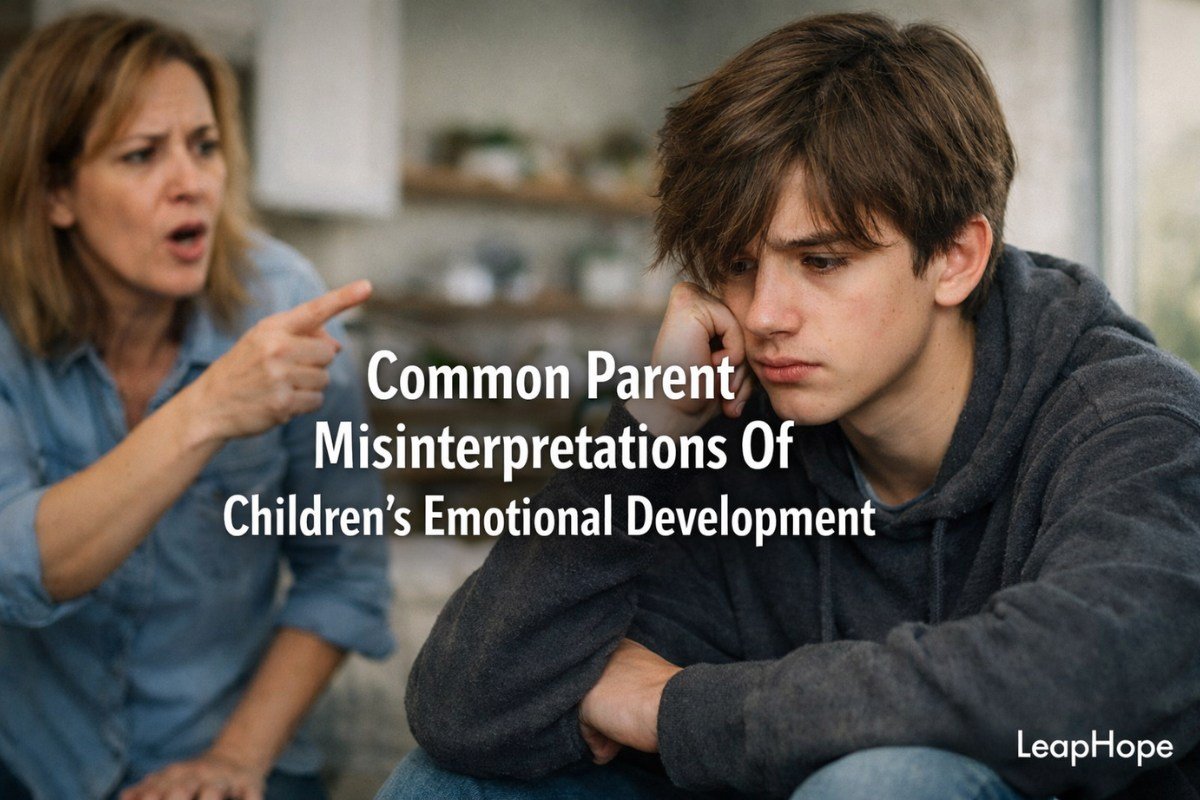
You notice your child’s reactions and feel unsure how to read them.
They get upset over things you didn’t think would matter.
They shut down when you expect them to explain.
Sometimes it feels like you’re responding correctly, but nothing changes.
You tell yourself they should be able to handle this by now.
Then you wonder if that expectation is the problem.
Parenting today comes with a lot of noise. Advice everywhere. Comparisons you didn’t ask for. Quiet pressure to get it right. In the middle of all that, it’s easy to misread what your child’s emotions are actually showing you.
This article looks at the ways parents often misunderstand children’s emotional development, and why those misunderstandings happen.
Most misunderstandings don’t come from lack of care. They come from expectations that feel reasonable, but don’t always match how emotional development actually works.
As children get older, parents naturally expect emotions to settle. Fewer outbursts. More self-control. Clearer explanations. It feels logical to think that age brings emotional steadiness.
So when a child who can talk well still melts down, shuts down, or reacts strongly, it feels confusing. You start wondering why things aren’t improving the way you thought they would.
Emotional growth doesn’t move step by step. Children can handle something well one week and struggle with the same thing the next. New situations, new pressures, and new awareness can make emotions feel bigger again.
From the outside, it can look like going backwards. From the inside, it’s often a child adjusting to something new they don’t yet know how to handle.
This uneven progress is one of the main reasons emotions are misread.
When behaviour keeps repeating, parents often question themselves. You may wonder if you’re being too strict, too soft, or inconsistent. You might feel like nothing you try is landing.
That frustration grows when advice around you suggests your child should already be coping better. The gap between what you expect and what you see becomes wider, and misunderstandings slip in without you realising it.
This thought shows up quietly for many parents. Your child understands the rules. They can explain what’s right and wrong. So when the same emotional reactions keep happening, it’s easy to feel confused or frustrated.
Knowing something and handling it are not the same. A child can understand expectations and still struggle when emotions show up. Feelings don’t wait for logic to catch up. They arrive fast, and for many children, they take over before any thinking happens.
So even though your child may seem old enough to manage their reactions, their ability to stay steady emotionally is still developing. Children often don’t have the words for what they’re feeling, so emotions come out through actions instead. We’ve explored this more deeply in why children express emotions through behaviour.
When children sense that they’re expected to handle emotions better, they often try. But trying doesn’t always work. Instead of calming down, they may feel more overwhelmed or ashamed for not coping the way they think they should.
This pressure can lead to bigger reactions, more shutdown, or more resistance. Not because your child doesn’t care, but because they feel they’re failing at something they don’t yet know how to do.
Parents usually see the behaviour and assume a lack of effort or maturity. What’s easy to miss is that emotional skills take longer to build than understanding rules.
Your child may know what’s expected. They just don’t always know how to manage what they’re feeling when it matters most.
This is a thought many parents have, even if they don’t say it out loud. The reaction feels too big for what just happened. A small change, a minor mistake, a simple “no,” and suddenly emotions spill over.
Often, the reaction isn’t about that one moment. Emotions build up quietly during the day. A child may hold in disappointment, stress, or confusion until something small becomes the point where it all comes out.
To you, it looks sudden. To your child, it feels like everything tipping over at once.
When a big reaction is dismissed as drama or overreaction, children don’t usually calm down. They either get louder to be heard or quieter to protect themselves.
Some children cry harder or argue more. Others stop talking altogether. Either way, the feeling doesn’t go away. It just changes how it shows up.
When a child feels that their emotions aren’t taken seriously, they may stop trying to explain them. Parents, in turn, may feel manipulated or worn out.
This gap grows not because either side is doing something wrong, but because the emotion underneath hasn’t been understood yet.
This is one of the most common ways behaviour gets misunderstood. When something keeps happening, it’s easy to assume your child is doing it to get a reaction from you.
For children, attention and connection are not separate things. When a child feels unsettled, unsure, or emotionally distant, behaviour becomes a way to pull closeness back in.
They’re not always trying to be noticed. They’re often trying to feel safe, reassured, or seen.
When behaviour is labelled as attention-seeking, parents may start ignoring it, getting stricter, or reacting with irritation. The hope is that the behaviour will stop if it’s not rewarded.
For many children, this does the opposite. Feeling ignored or misunderstood can make the behaviour stronger, not weaker.
Underneath repeated behaviour, there’s often a simple need. Comfort. Reassurance. A sense that someone is paying attention to how they’re feeling, not just what they’re doing.
When that need isn’t met, behaviour keeps trying in louder or different ways. Emotional understanding changes as children grow, which is why the same feeling can look so different at different ages. You can read more about this in how children understand emotions by age.
Not all emotional struggles are loud. Some children don’t act out at all. They pull in.
Some children stop reacting on the outside. They become quieter, more withdrawn, or unusually tired. They may complain of headaches or stomach aches. They may lose interest in things they used to enjoy.
Because there’s no disruption, it’s easy to assume everything is fine.
Quiet struggles don’t demand attention. Teachers may say your child is well-behaved. Others may not notice anything wrong. As a parent, you may even feel relieved that there are no big behaviours to deal with.
But inside, your child may be carrying emotions they don’t know how to release.
Many parents look back and realise the signs were there, just subtle. The child wasn’t causing problems, but they also weren’t fully at ease.
Missing these signs doesn’t mean you weren’t paying attention. It means emotional struggles don’t always show up in ways we expect.
Emotions don’t disappear as children grow. They change how they come out. What looks like one kind of struggle at one age often looks very different at another.
Younger children don’t have many words for how they feel, and they don’t have much control yet. When something feels upsetting or frustrating, it comes out through their body.
That’s when you see crying, screaming, hitting, throwing things, or clinging. It isn’t planned. It’s a reaction to a feeling they don’t know how to hold or explain.
At this stage, behaviour is the emotion.
As children grow, they become more aware of rules and expectations. They try to behave, not get into trouble, and not stand out. Because of that, emotions don’t always come out openly.
Instead, they may show up as irritability, resistance, procrastination, or sudden emotional reactions at home. A child might seem fine all day and then fall apart over something small in the evening.
The feeling was there earlier. It just didn’t have space to come out.
Teenagers often feel emotions very deeply, but sharing them feels risky. They’re more aware of judgment and misunderstanding. They may not want advice, questions, or reactions they can’t control.
So emotions may come out as silence, defensiveness, sarcasm, or pushing people away. From the outside, it can look like they don’t care. Inside, many teens are struggling with feelings they don’t know how to talk about safely.
Some misunderstandings pass once you notice them. Others linger and slowly shape how a child feels about themselves.
When a child feels understood, even small changes matter. Behaviour may not stop overnight, but it softens. Emotions pass more easily. Your child recovers faster after hard moments.
There’s movement again. Less tension. More ease.
Often, nothing dramatic changes. The child just seems lighter.
Sometimes, the same issues keep coming back. The same arguments. The same shutdowns. The same emotional distance. Even when you try to respond calmly, nothing seems to shift.
This is usually when misunderstandings have been sitting there for a while. The child feels unseen. The parent feels stuck. Both are trying, but missing each other.
Most parents feel this in their body before they can put it into words. A quiet worry. A sense that something isn’t settling the way it used to.
It’s not panic. It’s not certainty. Just a feeling that your child is carrying something heavier than before.
Noticing that feeling matters. In families caring for a disabled child, emotions and behaviour often carry extra weight. We’ve shared more about this experience in caring for a disabled child.
Misunderstandings don’t mean you’ve failed your child. They usually mean you were responding with the information you had at the time.
When behaviour is frustrating, it’s easy to focus on stopping it. But many parents notice a change when they pause and ask themselves what their child might be feeling underneath the behaviour.
This doesn’t mean ignoring limits. It means noticing that behaviour often carries more than just a rule being broken.
Children don’t grow emotionally on a schedule. Some days they cope well. Other days, the same things feel harder again. That back and forth is part of learning how to handle feelings.
When pressure to “handle it better” eases, children often feel safer showing what’s actually going on inside them.
Seeing emotions more clearly isn’t about doing everything right. It’s about staying open to the idea that what you’re seeing on the outside may not be the whole story.
There are moments when you’re paying attention, trying to understand, and still feeling stuck. Not because you’re doing something wrong, but because some emotions are hard for children to work through inside the family, even in a caring home.
Children are often more aware of their parents’ feelings than we realise. They may worry about upsetting you, disappointing you, or adding to your stress. Because of that, they sometimes hold things back.
Talking to someone outside the family can feel easier. There’s less pressure to explain things “properly” and less fear of causing worry. Some children open up more. Others don’t talk much at first, but feel safer just being understood.
Support isn’t about fixing a child or pointing out mistakes. It helps slow things down. It helps make sense of patterns that feel confusing at home.
For parents, it can offer a clearer picture of what behaviour might be communicating. For children, it can reduce the need to act feelings out, because those feelings are finally being noticed.
Reaching out doesn’t mean something is seriously wrong. Sometimes it just means you want help understanding your child better, before misunderstandings grow heavier.
Many parents do, without realising it. Children can understand rules and still struggle with feelings. Emotional control usually comes much later than we expect.
Your calm helps, but it doesn’t always stop the feeling underneath. Strong emotions can still spill out even when the environment feels safe.
If the same behaviour keeps repeating despite your efforts, it’s often a sign there’s more going on emotionally than what’s visible.
Sometimes, yes. Not because you’re doing something wrong, but because children can feel pressure or dismissal even when you mean well.
Emotional development doesn’t move evenly. Children may be ahead in some areas and behind in others, and that’s more common than it seems.
Some do, especially with understanding and support. Others need more time and help to feel steady again.
When emotions feel stuck, keep repeating, or start affecting daily life over time, it’s worth paying closer attention.
Many children hold things in. When they finally release emotions, it can come out all at once.
Yes. Children don’t need perfect responses. They need consistency, care, and someone willing to keep trying to understand.
Feeling seen. Feeling safe. And knowing that their emotions aren’t too much for the people who care about them.
Misunderstanding your child’s emotions doesn’t mean you’re failing. It means you’re trying to make sense of something that isn’t always clear.
Children don’t need perfect responses. They need patience, space, and someone willing to keep looking beyond behaviour to what they’re feeling inside.
Sometimes, that willingness makes more difference than getting it right. Sometimes a neutral space helps children and parents understand emotional patterns that feel stuck at home. Exploring online child and teen counselling can be one gentle way to gain that clarity.
Because emotions don’t always show up clearly. Children often express feelings through behaviour, not words.
Not always. Emotional control develops slowly and unevenly, even when children understand rules.
Small moments often release emotions that have been building up quietly over time.
Usually no. Most children aren’t trying to manipulate, they’re struggling to cope with feelings they don’t understand yet.
Because understanding a feeling isn’t the same as being able to manage it in the moment.
Home feels safe. Many children hold emotions in all day and release them where they feel secure.
Sometimes, yes, without meaning to. Pressure, dismissal, or rushing emotions can add to the struggle.
If you often think “they should be past this by now,” expectations may be ahead of emotional readiness.
Some do with time and understanding. Others need more support to feel steady again.
Feeling understood, not judged, and knowing their emotions are safe to express.
Your child keeps saying their stomach hurts. Or their head. Or their body feels tired…
Your child speaks confidently. They manage school, conversations, and new situations well. From the outside,…
Your child doesn’t look afraid. They go to school. They talk to people. They seem…
Your child used to be calm. Not perfect, but steady. Easy to talk to. Rarely…
Your child starts crying, and you don’t see a clear reason. Nothing big happened. No…
Why does it hurt when your wife avoids intimacy? For many husbands, intimacy avoidance feels…