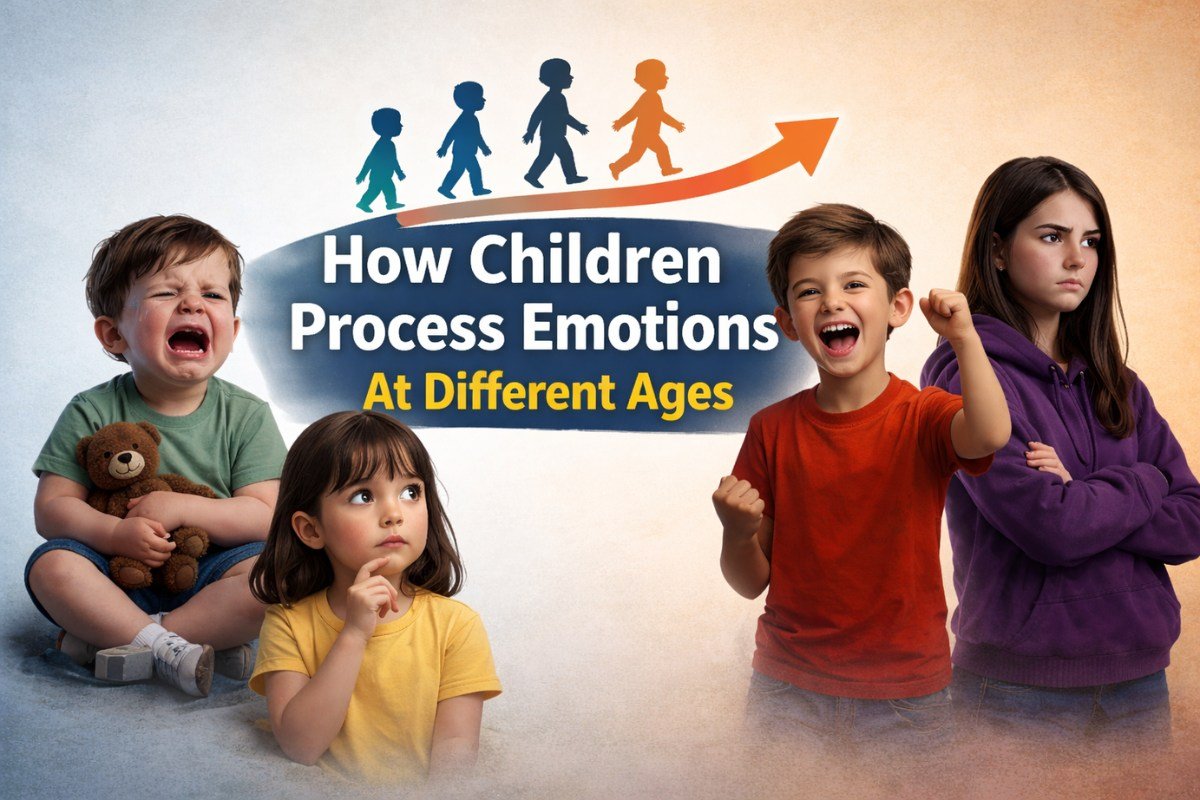
You notice it when your child reacts in a way that feels bigger than the moment.
They get upset over something small.
Or they go quiet all of a sudden, without a clear reason.
You ask what’s wrong.
They say, “I don’t know.”
You try again later.
Same answer.
After a while, you stop asking so much. Not because you don’t care, but because every question seems to make things heavier, not clearer.
Your child isn’t unhappy all the time.
They laugh, play, go to school, do normal things.
But when emotions come up, they come out sideways.
Anger instead of sadness.
Silence instead of words.
You’re left wondering if this is just part of growing up, or if your child is feeling more than they know how to handle.
This article is about that confusion, and how children experience emotions differently as they grow.
This is often the first thing parents notice. Your child reacts strongly, but when you ask what’s wrong, there’s no clear answer. Sometimes they say “I don’t know.” Other times they shrug, change the topic, or walk away.
You see the emotion before you hear it explained. The mood changes quickly. Your child may cry, snap, or shut down over something that doesn’t seem that serious. When you try to talk about it, the conversation goes nowhere.
This can leave you feeling stuck. You can tell something is bothering your child, but you don’t know where to begin because they don’t seem to know either.
For many children, feelings come before understanding. They feel something strongly, but they don’t yet know what that feeling is or why it showed up. The emotion is real, but it’s unclear even to them.
Because of that, emotions often come out as behaviour instead of words. Sadness may look like anger. Worry may look like irritation. Overwhelm may look like silence.
From your side, it can feel like you’re asking reasonable questions and getting nothing back. You might start wondering if your child is avoiding the conversation or choosing not to open up.
Most of the time, that’s not what’s happening. Your child knows something feels wrong, but they don’t yet have the ability to sort it out or explain it clearly. Until they do, emotions tend to show up in ways that are hard to understand.
At some point, many children stop showing their emotions as openly as they once did. The big reactions lessen, but that doesn’t always mean the feelings have settled.
Your child may start trying harder to behave, especially outside the home. They keep themselves together at school, follow rules, and avoid drawing attention to themselves. By the time they get home, they’re drained.
This is often when emotions come out in small but sharp ways, or all at once.
As children grow, they become more aware of expectations. They don’t want to upset adults, get into trouble, or seem different from others. So they push feelings down, even though they don’t fully understand them.
They may not tell you they’re overwhelmed. They just carry it quietly.
Instead of obvious sadness, you might see irritability, silence, headaches, or sudden emotional reactions over minor things. This can confuse parents because the child appears fine most of the time.
Often, home becomes the only place where your child feels safe enough to let their guard down. The emotions didn’t disappear during the day, they were just held in.
This stage can be confusing because your child may still look like themselves on the outside, but emotionally, things don’t feel the same anymore.
Your child starts noticing themselves more. How they sound. How they look. How others react to them. Comments that once rolled off now stick. A small correction or casual remark can stay with them longer than you expect.
They feel things more deeply, but they don’t always know why. The emotion is strong, but the reason behind it feels unclear even to them.
Children at this age begin comparing themselves to others. They notice who’s better at something, who gets attention, who fits in more easily. This makes everyday situations heavier than they used to be.
A mistake, a loss, or feeling left out can trigger a strong reaction that seems out of proportion. For your child, it doesn’t feel small. It feels personal.
From the outside, this can look like overreacting or unnecessary sensitivity. Some parents respond by telling their child to toughen up or not take things so seriously.
What’s usually happening isn’t drama. It’s emotional awareness growing faster than emotional balance. Your child is noticing more about themselves and the world, but they don’t yet know how to steady themselves inside it.
By the time children reach their teenage years, emotions often feel stronger, but sharing them feels harder. You may notice that your child has a lot going on inside, yet very little comes out in words.
Some teenagers react with anger. Others withdraw. Some stay in their rooms, keep conversations short, or seem distant even when they’re around. From the outside, it can look like they don’t care or don’t want to talk.
Inside, many teenagers feel things intensely. Worry, embarrassment, disappointment, and self-doubt can all exist at once. The emotion is there, but sorting through it feels exhausting.
Teenagers are often afraid of being misunderstood. They may worry that if they start talking, they’ll be judged, corrected, or told what to do. Even gentle questions can feel exposing when they’re already unsure of themselves.
So instead of explaining how they feel, they protect themselves by saying very little.
This can be one of the hardest stages for parents. You want to stay close, but every attempt to connect seems to push your child further away. You might feel shut out, confused, or even rejected.
What’s often happening is not distance from you, but difficulty managing emotions they don’t yet know how to carry or explain. Your teenager may need space, but they still need to know you’re there when they’re ready.
When emotions show up as behaviour, it’s easy to focus on what’s visible and miss what’s underneath. Most misunderstandings don’t come from lack of care, they come from trying to respond in the moment without knowing what the behaviour really means.
Many parents move into problem-solving quickly. You ask questions, offer solutions, or try to make the feeling go away. This usually comes from worry and love, not control.
But when a child is emotional, fixing too fast can feel like being brushed past. Your child may feel unheard, even when you’re trying to help.
Saying things like “it’s not a big deal” or “you’ll be fine” often comes from wanting to calm your child. But if the feeling is still strong inside them, reassurance can feel confusing or dismissive.
Your child may hear, “You shouldn’t feel this way,” even if that’s not what you meant.
Parents often expect children to explain their feelings clearly before they’re ready. When that doesn’t happen, it can lead to frustration on both sides.
What’s easy to miss is that children don’t need perfect responses. They need space for the feeling to exist before it can be understood. When behaviour is met with curiosity instead of correction, emotions tend to settle more naturally.
When your child is emotional, it’s natural to want to do something that makes it better. Most parents aren’t trying to control feelings, they’re trying to ease them. The difficulty is that emotional support doesn’t always look like action.
When a child is overwhelmed, questions can feel heavy, even gentle ones. “What happened?” or “Why do you feel this way?” can be hard to answer when the feeling itself is still unclear.
Often, what helps more is knowing you’re nearby and available, without needing an explanation right away. Presence gives emotions room to settle. Understanding usually comes later.
It’s uncomfortable to watch your child struggle. Many parents try to calm things quickly so everyone can move on. But rushing emotions away can make a child feel like their feelings are a problem.
When emotions are allowed to exist, even briefly, children learn that they don’t have to fight or hide them. Over time, this makes it easier for them to recognise and talk about what they’re feeling.
Children tend to open up when they don’t feel pressured to do so. Calm responses, predictable routines, and knowing they won’t be judged or corrected for how they feel all matter.
Support doesn’t mean having the right words. Often, it means staying steady while your child finds theirs.
There are times when being a caring, present parent still doesn’t feel like enough. Not because you’re doing something wrong, but because your child is dealing with emotions they don’t yet know how to handle, even with your support.
Children are often very aware of their parents’ feelings. They don’t always say this out loud, but many try to protect you from worrying or feeling upset. Because of that, they may hold things back, even when they’re struggling.
A neutral space can feel different. There’s less pressure to explain, less fear of disappointing someone they love. For some children, that makes it easier to talk, or even just feel, without holding everything in.
Support isn’t about fixing a child or changing who they are. It’s about giving them room to explore emotions at their own pace, with someone who isn’t part of daily routines, rules, or expectations.
For many parents, this kind of support doesn’t replace what happens at home. It adds to it. It helps the child understand themselves better, which often makes emotional moments feel less confusing over time.
Some parents reach out when emotions feel stuck, when the same struggles keep repeating, or when their child seems weighed down by feelings they can’t shake. Others simply want a clearer understanding of what their child is going through.
If you ever feel unsure, having a quiet conversation with a professional through a child counselling space can offer clarity, without labels or pressure. Sometimes, just being heard in the right setting can ease more than expected.
Most children aren’t trying to avoid the question. They truly don’t know yet. The feeling is there, but it hasn’t taken shape inside them. Saying “I don’t know” is often the most honest answer they have at that moment.
Home is usually where children feel safest. They spend the day holding things together, following rules, and managing expectations. When they come home, the emotions they’ve been carrying finally come out. It doesn’t mean you’re doing something wrong. It often means your child trusts you.
Yes, but they don’t disappear overnight. Emotions show up differently at different ages. What looks like a meltdown at one stage may look like silence or irritation at another. The feeling underneath often stays the same, even when the behaviour changes.
Parents often notice it in patterns. Emotions last longer than they used to. Reactions feel heavier. Your child has a harder time settling, even after comfort or time. It’s less about one bad day and more about what keeps repeating.
Some emotional struggles ease with time and support. Others need more space and understanding before they settle. What helps most is paying attention, staying connected, and trusting your sense of when something feels heavier than a passing phase.
Children don’t process emotions in straight lines. They feel things before they understand them, and often show them in ways that are hard to read. As they grow, the feelings change shape, but the need to be understood stays the same.
You won’t always know what your child is feeling, and that’s okay. What matters most is noticing, staying present, and allowing space for emotions to exist without rushing them away.
Understanding doesn’t come from having the right response every time.
It comes from paying attention, over and over again.
Sometimes, having a neutral space helps children open up in ways they can’t at home. If you feel your child is carrying emotions they don’t know how to express yet, exploring options like online child and teen counseling can offer gentle support without pressure.
Because the feeling is there, but the understanding isn’t yet. Many children feel emotions before they can make sense of them.
Yes, especially at certain ages. Small triggers can release much bigger feelings that were already building inside.
Home feels safer. Many children hold emotions in all day and release them where they feel most secure.
Knowing a word doesn’t mean knowing how to manage the feeling. Control comes much later than language.
Talking can feel overwhelming when the emotion is still strong. Silence is often protection, not rejection.
Not usually. They’re more often a sign that a child is overwhelmed and doesn’t know how to cope yet.
As children grow, they become more aware of themselves and others. That awareness can make emotions feel heavier.
Look at patterns, not single moments. How long feelings last and how much they affect daily life matters more than intensity.
Gentle openness helps, pressure usually doesn’t. Many children talk more once they feel calm and safe.
Some do, some need more support along the way. Paying attention and staying connected makes the biggest difference either way.
Your child keeps saying their stomach hurts. Or their head. Or their body feels tired…
Your child speaks confidently. They manage school, conversations, and new situations well. From the outside,…
Your child doesn’t look afraid. They go to school. They talk to people. They seem…
Your child used to be calm. Not perfect, but steady. Easy to talk to. Rarely…
Your child starts crying, and you don’t see a clear reason. Nothing big happened. No…
Why does it hurt when your wife avoids intimacy? For many husbands, intimacy avoidance feels…