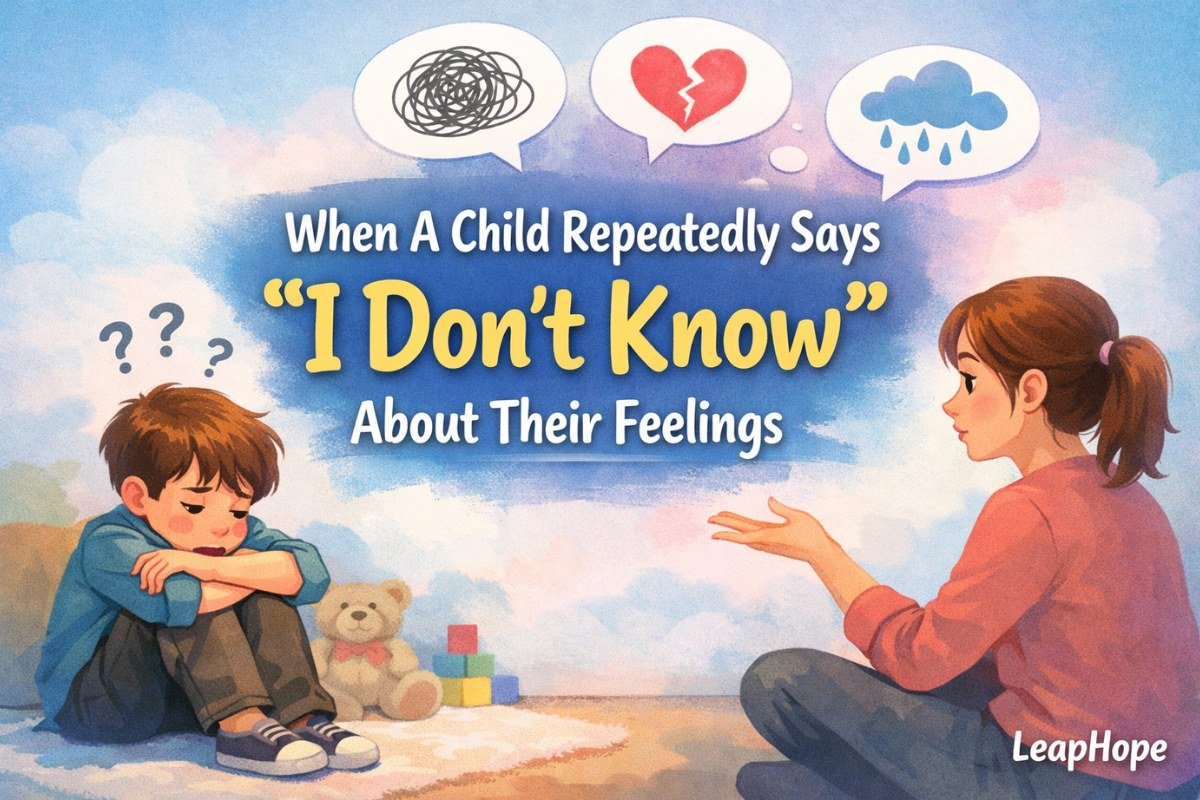
You ask your child how they’re feeling.
They pause, look away, and say, “I don’t know.”
You ask again later. The answer is the same.
Not angry. Not dramatic. Just flat and closed.
Over time, that answer starts to worry you more than if they were upset. You can see something is there, but you can’t reach it. And in a world where children are expected to talk about feelings early, “I don’t know” can feel like a wall.
Most children aren’t hiding anything. They’re sitting with feelings they don’t yet understand or know how to explain.
This article looks at why some children repeatedly say “I don’t know” about their feelings, what that response often means, and how parents can stay connected without pushing too hard.
Hearing the same answer again and again can feel frustrating. It can also make parents worry that something important is being avoided or missed.
Children use “I don’t know” in many situations, not just when they’re upset. It shows up when they’re tired, confused, or overwhelmed. It becomes a safe response when they don’t know what else to say.
For many children, it’s easier to say “I don’t know” than to try to explain something that feels unclear inside.
Parents often hear “I don’t know” and think something is wrong. You may wonder if your child is hiding feelings, shutting you out, or struggling more than they can say. When children don’t yet have the words for what they feel, emotions often come out through behaviour. We’ve explored this more in why children express emotions through behaviour.
The worry comes from not knowing what to do next. When words stop, parents are left guessing, and that uncertainty can feel heavy.
For many parents, this is the hardest part to accept. It feels strange to think a child could feel something strongly but not know what it is.
Children often feel things in their body before they understand them in their mind. A tight chest, a heavy feeling, restlessness, or sudden tears can all happen without a clear reason they can explain.
Adults usually learn to label these sensations over time. Children are still learning. So the feeling is real, but the meaning isn’t clear yet.
Most of the time, “I don’t know” isn’t avoidance. It’s honesty. Your child is telling you they feel something, but they don’t yet have a name for it.
They’re not holding information back. They’re sitting in confusion themselves. And being asked to explain something they don’t understand can make them shut down even more.
As parents, asking questions feels like the right thing to do. You’re trying to understand. You’re trying to help. But for some children, questions can make things harder instead of easier.
When a child is already confused about how they feel, being asked to explain it can feel overwhelming. They may feel pressure to come up with the right answer, even when nothing feels clear inside.
So they freeze. Or they shut down. “I don’t know” becomes the safest thing they can say.
Repeated questions can make a child feel watched or pushed. Not because you’re doing something wrong, but because they don’t yet have what you’re asking for.
When words don’t come easily, silence can feel easier than trying and failing to explain. This isn’t defiance. It’s a way of coping with uncertainty.
When a child keeps saying “I don’t know,” it usually does mean something. Just not what we expect.
Sometimes there’s too much going on inside at once. Sad, angry, worried, tired — all mixed together. When feelings pile up like that, it’s hard to pull one out and explain it. Emotional understanding develops slowly and changes with age, which is why children struggle to explain feelings differently over time. You can read more in how children understand emotions by age.
“I don’t know” can mean, “There’s too much, and I don’t know where to start.”
Some children need time before they can speak. Talking too soon can feel exposing or risky. They may worry about being corrected, misunderstood, or told they’re overreacting.
In those moments, “I don’t know” is a way of protecting themselves until they feel safer.
Emotional words aren’t natural for many children. They may know something feels wrong, but they don’t know how to name it.
So instead of guessing or saying the wrong thing, they choose the only answer that feels true.
“I don’t know” isn’t always a dead end. Often, it’s the starting point.
The same words can mean different things, depending on how old your child is and what they’re dealing with.
Young children feel a lot, but they don’t yet connect feelings to words. They may feel upset, scared, or uncomfortable without knowing why.
When you ask how they feel, “I don’t know” often means the feeling is real, but the language isn’t there yet. At this age, not knowing is normal.
As children grow, they become more aware of expectations. They don’t want to say the wrong thing or get into trouble. Sometimes they’re unsure whether their feeling is “okay” to share. “I don’t know” is easy to misread as avoidance, when it often isn’t. We’ve written more about this in how parents misread child emotional development.
“I don’t know” can become a safe answer when they’re worried about how their feelings will be received.
For teens, “I don’t know” often protects their privacy. They may know how they feel but aren’t ready to open it up for questions, advice, or judgment.
It can also mean they’re still figuring things out themselves. Emotions can change quickly at this age, and putting them into words can feel risky.
At every stage, “I don’t know” is less about refusal and more about where your child is emotionally in that moment.
When a child keeps saying “I don’t know,” it’s easy to make sense of it in ways that don’t really fit what the child is experiencing.
Many parents think their child is dodging the conversation. It can feel like they don’t want to talk or are choosing not to engage.
Most of the time, children aren’t avoiding anything. They truly don’t have an answer yet. Pushing for one can make them feel more stuck, not more open.
This thought can hurt. Parents often wonder if their child doesn’t feel safe enough to share.
In most cases, trust isn’t the problem. The child may trust you completely but still not understand what’s going on inside themselves. Not knowing how to explain a feeling isn’t the same as not wanting to share it.
Repeatedly asking can come from care, but it can also add pressure. When a child feels watched for answers they don’t have, they may pull back even more. Many children carry emotional needs they can feel but can’t yet explain. We’ve shared more about this in emotional needs children cannot express.
Sometimes, space does more than questions. Feeling unpressured can make it easier for words to come later.
When a child says “I don’t know,” parents often try to help by explaining or reassuring. That response comes from care. But it doesn’t always bring clarity.
Explaining emotions assumes the feeling is already understood. For many children, it isn’t. They feel something, but it hasn’t taken shape yet.
So when you explain why they shouldn’t feel worried or upset, it can feel like you’re talking past what’s happening inside them. The words make sense, but the feeling stays.
Saying “it’s okay” or “you’ll be fine” is meant to calm. But if the child doesn’t know what they’re feeling, reassurance can feel empty or even confusing.
They may hear that the feeling should go away before it’s been understood. When that happens, “I don’t know” keeps coming back, because nothing inside has settled yet.
When the feeling hasn’t changed, the answer won’t either. Repeating “I don’t know” often means the child is still in the same place emotionally.
It’s not stubbornness. It’s a sign that understanding needs to come before explanation.
Hearing “I don’t know” doesn’t always mean something is wrong. In many cases, it’s part of how children learn to understand themselves.
For some children, “I don’t know” shows up during tired moments, stressful days, or new situations. After rest, comfort, or time, the child settles again.
They may open up later on their own. Or the feeling passes without needing to be named. This back and forth is common, especially as children grow and face new pressures.
It can feel different when “I don’t know” becomes the only answer for a long time. When it shows up every time you ask. When your child seems more withdrawn, tense, or distant than before.
You may notice fewer reactions, less sharing, or a child who seems unsure of themselves more often. Not dramatic changes, just a quiet shift that doesn’t lift.
That’s usually when parents sense this isn’t just a phase. Not because of one answer, but because of the pattern around it.
When your child keeps saying “I don’t know,” it can leave you feeling helpless. Doing nothing feels wrong, but pushing for answers doesn’t help either. This is where small shifts matter.
Sometimes the most helpful response is to stop asking for clarity right away. Letting the moment pass tells your child they don’t have to perform or explain on demand. In families caring for a disabled child, emotional confusion and overload can be even harder to put into words. We’ve discussed this experience in caring for a disabled child.
Space isn’t ignoring. It’s saying, “You don’t need to have the words right now.”
Children don’t always need feelings labelled. They need them allowed. Sitting nearby, staying calm, or simply acknowledging that something feels hard can help more than trying to define it.
When the pressure to explain drops, words often come later, naturally.
Parents worry that giving space means missing something important. Or that staying quiet means letting a problem grow.
But often, it’s the opposite. When children feel less watched and less questioned, they feel safer sorting things out inside themselves.
Being available without demanding answers can be one of the most supportive things you do.
Sometimes, even when you give space and stay patient, “I don’t know” keeps coming back. Not louder, not dramatic, just stuck. That can feel worrying in a quiet way.
Children are often very aware of their parents’ emotions. They may worry about upsetting you, disappointing you, or making things feel heavier at home. Even when you’re calm, that awareness can make it hard for them to speak freely.
A neutral space can feel different. There’s less pressure to explain things properly. Less fear of being misunderstood. Some children talk more there. Others don’t talk much at first, but feel relief not having to know the answers.
Support isn’t about pushing children to talk. It’s about helping them sit with feelings safely until they start making sense.
Over time, confusion softens. Feelings become clearer. “I don’t know” doesn’t need to disappear right away, it just stops feeling so heavy.
Exploring online child and teen counseling can be one gentle way to support a child who seems stuck with feelings they can’t yet explain.
Because they often feel something before they understand it. The feeling is there, the words are not.
Most of the time, no. Many children aren’t hiding anything, they’re just confused about what they’re feeling.
You don’t have to stop caring or checking in, but asking less often and with less pressure can help more than repeated questions.
Not at all. It often means emotional awareness is still forming, not missing.
Children sometimes find it easier to talk where there’s less emotional weight. This isn’t a rejection of you.
It can be, especially if “I don’t know” comes with withdrawal, worry, or repeated emotional shutdown. Patterns matter more than one answer.
Because reassurance works best after feelings are understood. Before that, it can feel like the emotion is being skipped.
Many children do as they gain more emotional language. Some need more time and support to get there.
By staying present, lowering pressure, and letting feelings exist without demanding explanations.
When “I don’t know” becomes constant, your child seems more withdrawn over time, or emotions don’t seem to settle at all.
When a child keeps saying “I don’t know,” it doesn’t mean they don’t care or that they’re shutting you out. Most of the time, it means they’re still trying to understand what’s happening inside themselves.
You don’t need to force words or fix the feeling right away. Staying present, patient, and open matters more than getting answers.
Often, when children feel less pressure to explain, clarity comes on its own, in time, and in their own way. Sometimes a neutral space helps children make sense of feelings they can’t explain at home. Exploring online child and teen counseling can be one gentle way to support that process.
Because they often feel something before they understand it. The emotion is there, but the words aren’t yet.
Most of the time, no. Many children genuinely don’t know what to say, not what to hide.
Constant asking can feel like pressure. Checking in gently, then giving space, often works better.
No. It usually means emotional awareness is still developing, not missing.
Questions can feel overwhelming when feelings are unclear. Silence is often a way to cope.
Not necessarily. Sometimes it’s easier to talk where there’s less emotional weight.
Yes, it can. Confusion, worry, or emotional overload can make it hard to put feelings into words.
Many children do as they gain more emotional language. Some need more time and support.
By staying calm, present, and letting feelings exist without demanding explanations.
If “I don’t know” becomes constant, your child withdraws more over time, or emotions never seem to settle.
Your child keeps saying their stomach hurts. Or their head. Or their body feels tired…
Your child speaks confidently. They manage school, conversations, and new situations well. From the outside,…
Your child doesn’t look afraid. They go to school. They talk to people. They seem…
Your child used to be calm. Not perfect, but steady. Easy to talk to. Rarely…
Your child starts crying, and you don’t see a clear reason. Nothing big happened. No…
Why does it hurt when your wife avoids intimacy? For many husbands, intimacy avoidance feels…